
Car dimensions influence everything from parking comfort to highway stability. Among those dimensions, width plays a bigger role than many drivers realize. It affects how easily a vehicle fits into garages, navigates narrow streets, and provides interior shoulder room for passengers. Manufacturers carefully design width to balance safety, aerodynamics, and cabin space without compromising maneuverability.
Over the decades, passenger vehicles have gradually become wider. Modern safety standards, side-impact protection, and consumer demand for spacious interiors have all contributed to this growth. Yet not every vehicle follows the same pattern. Compact cars, midsize sedans, SUVs, and pickup trucks all vary significantly in overall width. To understand what counts as average, it helps to examine how measurements are taken, how classes differ, and why width influences daily usability more than most people expect.
What Is The Average Width Of A Modern Car
Standard Passenger Car Width Measurements
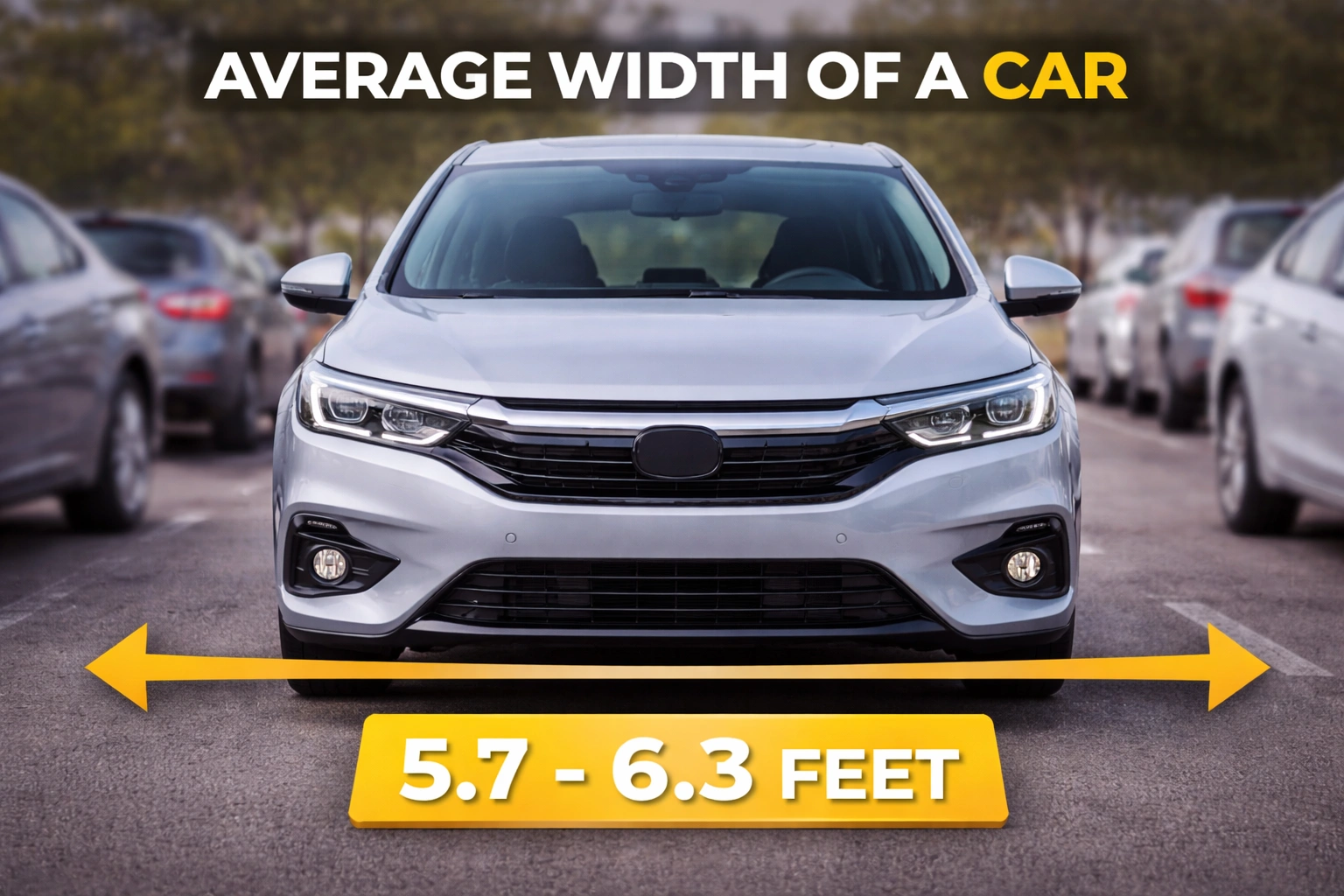
The average width of a modern passenger car typically ranges between 70 and 75 inches, excluding side mirrors. When mirrors are included, total width can increase by 8 to 12 additional inches. Most manufacturers list body width without mirrors in official specifications, as mirrors are considered adjustable components.
Compact cars often measure around 69 to 71 inches wide. Midsize sedans generally fall between 72 and 74 inches. Larger full-size sedans can approach 76 inches. For reference, a vehicle like the Honda Civic measures roughly in the low 70-inch range, while a Toyota Camry sits slightly wider.
Width is measured at the widest fixed body point, typically door panels or fender edges. It does not include temporary accessories or folded mirrors. This standard measurement allows fair comparison across vehicle segments.
While these numbers provide a baseline, variations occur depending on design philosophy and regional regulations. European compact cars may be slightly narrower than their American counterparts due to road size differences.
How SUVs And Trucks Compare
Sport utility vehicles and pickup trucks are generally wider than sedans. Many compact SUVs measure between 72 and 75 inches wide. Midsize SUVs often exceed 76 inches. Full-size SUVs and trucks can reach 80 inches or more without mirrors.
For example, the Ford F-150 measures over 79 inches wide without mirrors. Larger heavy-duty trucks may exceed 80 inches, triggering additional lighting requirements under U.S. regulations.
The increase in width supports larger wheel tracks, broader cabins, and improved stability. However, wider vehicles require more awareness in tight urban settings. Parking garages designed decades ago may feel restrictive for modern full-size models.
Despite this growth, regulatory limits prevent extreme expansion. Road lane widths and safety guidelines influence maximum dimensions for passenger vehicles.
Why Car Width Has Increased Over Time
Safety Standards And Structural Reinforcement
One major factor behind increasing width is safety regulation. Modern vehicles must meet stringent crash protection standards. Side-impact protection beams, reinforced door structures, and curtain airbags all require space.
To accommodate these components while preserving interior comfort, manufacturers often expand overall width slightly. Wider vehicles allow thicker door panels and improved crumple zones. This structural expansion contributes to passenger protection during collisions.
Advancements in materials such as high-strength steel and aluminum have helped control weight despite wider bodies. Even so, physical reinforcement adds measurable size.
Consumer demand also plays a role. Buyers expect generous shoulder room and comfortable seating for five adults. Wider cabins make that possible without crowding.
Stability, Handling, And Design Trends
A wider track width — the distance between left and right wheels — improves vehicle stability. Broader stances reduce body roll and enhance cornering balance. As performance expectations have grown, manufacturers have widened vehicles to support larger tires and improved suspension geometry.
Design trends also favor bold, planted appearances. Wider proportions create a more aggressive and premium look. This aesthetic shift has influenced sedans and SUVs alike.
Aerodynamics further affect width decisions. Designers must balance frontal area with airflow management. While wider bodies increase frontal surface area, careful shaping and contouring maintain efficiency.
As technology advances, packaging becomes more efficient. Electric vehicles often feature wide, flat battery packs mounted beneath the floor. This architecture can contribute to slightly broader dimensions compared to earlier internal combustion designs.
How Width Affects Everyday Use
Parking, Garages, And Urban Driving
Parking convenience depends heavily on vehicle width. Standard parking spaces in many regions measure about 8 to 9 feet wide. A car measuring 75 inches wide occupies over 6 feet, leaving limited clearance on either side.
Drivers must account for door swing space when exiting. Narrow garage openings can also challenge owners of larger SUVs or trucks. Older residential garages sometimes measure just 8 feet wide internally, leaving minimal room for wider modern vehicles.
Urban streets in older cities were designed for narrower cars. As vehicle sizes increase, tight lanes and narrow driveways require greater precision. Parking sensors and cameras have become common partly because of expanded vehicle dimensions.
Despite these challenges, wider vehicles offer more interior comfort. The trade-off between cabin space and maneuverability remains central to automotive design.
Interior Space And Passenger Comfort
Width directly influences shoulder room. In compact cars, interior width can feel limited when three adults sit in the rear seat. Midsize and full-size vehicles provide noticeably more lateral space.
Manufacturers carefully allocate width between structural elements and cabin space. Efficient design ensures passengers benefit from exterior dimensions. Wider vehicles often feature broader center consoles and more substantial door armrests.
Family-oriented models prioritize rear seat comfort. SUVs, in particular, leverage their width to provide spacious second and third rows. This enhances practicality for daily commuting and long trips alike.
Ultimately, width contributes to perceived vehicle class. Broader proportions often align with premium positioning and higher market segments.
Comparing Global Vehicle Width Standards
Differences Between Regions
Vehicle width varies slightly across global markets. European cities with older infrastructure often favor narrower cars. Compact hatchbacks in Europe may measure under 70 inches wide.
In contrast, North American vehicles trend wider due to broader highways and parking facilities. Pickup trucks and large SUVs dominate certain markets, influencing average dimensions upward.
Japanese domestic market vehicles sometimes follow kei car regulations, limiting width significantly. These vehicles are far narrower than global averages.
International manufacturers adjust designs to comply with local regulations and consumer preferences. As globalization continues, many models are engineered to meet multiple market standards with minimal dimensional changes.
Regulatory Limits And Road Design
Road lane width influences vehicle design constraints. In the United States, typical highway lanes measure 12 feet wide. Urban lanes may be narrower. Engineers ensure that vehicles fit safely within these parameters while maintaining mirror clearance.
Vehicles exceeding 80 inches in width without mirrors must include clearance lights under federal regulations in the U.S. This rule primarily affects large trucks.
Infrastructure planning shapes automotive trends. As cities consider narrower lanes to reduce traffic speed, manufacturers may face new design considerations.
Electric vehicle growth may also influence future dimensions. Battery packaging flexibility could allow designers to maintain interior width while optimizing exterior proportions.
Closing Perspective
Average passenger cars today measure roughly 70 to 75 inches wide, while SUVs and trucks often extend beyond that range. This dimension has grown steadily over time due to safety improvements, design evolution, and consumer demand for spacious interiors.
Width influences stability, comfort, and road presence, but it also affects parking ease and urban maneuverability. Choosing the right vehicle size depends on lifestyle, driving environment, and personal priorities.
As automotive engineering continues to evolve, width will remain a carefully balanced measurement. It represents more than a number in a specification sheet — it shapes how a vehicle fits into daily life, from garage space to passenger comfort.