

If you’re tall, choosing a car is rarely simple. Brochure numbers may promise generous legroom or headroom, yet many vehicles still force awkward knee angles, limited seat travel, or low rooflines that brush your head—especially on longer drives.
For drivers over six feet tall, comfort isn’t a luxury; it’s a necessity that affects posture, fatigue, and even safety.
This guide is written specifically for tall drivers and families with taller occupants who want vehicles that genuinely accommodate long legs, broad shoulders, and taller torsos.
Rather than relying only on specifications, this article focuses on how space is actually used, including seat track length, steering wheel adjustability, roof shape, and pedal placement. You’ll also find honest notes on where certain vehicles fall short.
The goal isn’t to recommend the biggest vehicles blindly, but to help you choose a car that fits your body comfortably for years, not just during a short test drive.
Sources and Research note
This article references vehicle interior dimensions, overall specifications, and other features commonly published by Edmunds, MotorTrend, Car and Driver, Kelley Blue Book (KBB), and manufacturer technical documentation.
What Actually Matters for Tall Drivers (And What Doesn’t)
Before jumping into specific models, it helps to understand what really makes a car comfortable for tall people.
The Critical Factors
- Seat travel length: Long fore-aft adjustment matters more than raw legroom numbers.
- Seat height range: Tall drivers need a seat that can go down, not just up.
- Steering wheel reach & tilt: A telescoping wheel prevents stretched arms and shoulder fatigue.
- Pedal placement: Poor pedal geometry can cause knee and ankle strain.
- Roofline shape: Sloping roofs reduce usable headroom even if specs look good.
Common Mistakes Buyers Make
- Relying only on published legroom figures
- Ignoring steering wheel adjustability
- Assuming SUVs are automatically better
- Skipping extended test drives
With that context, let’s look at cars that consistently accommodate taller bodies without compromise.
Best cars for tall people
1. 2026 Chevrolet Tahoe
- Price: $63,495–$86,495
- Front Headroom: 42.3 in.
- Front Legroom: 44.5 in.
As far as driver headroom and legroom are concerned, the Chevrolet Tahoe sets a strong baseline for tall drivers. The front seats offer generous legroom with long seat tracks that allow drivers over 6’4” to stretch out comfortably without locking their knees.
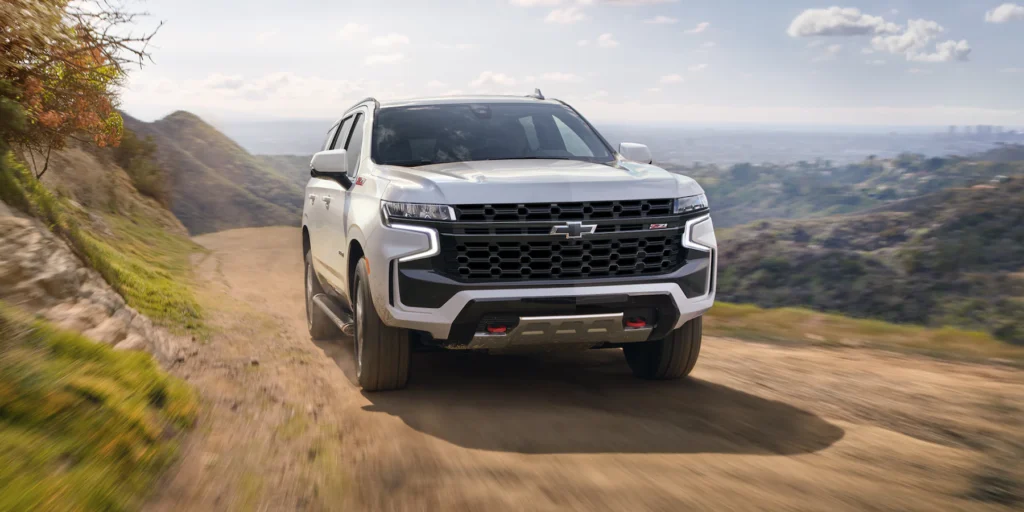
Headroom remains ample even with a sunroof, thanks to the upright windshield and boxy roof design. The second row is spacious, and the third row provides 34.9 inches of legroom, which is better than average for the segment.
Completely redesigned in 2021 and refined through 2026, the Tahoe retains its truck-based construction but rides more comfortably than earlier generations.
It offers modern connectivity, a commanding seating position, and an EPA-estimated 20 mpg highway with the base V8. It’s not ideal for urban parking or buyers seeking fuel efficiency, but for tall drivers who want space without compromise, it remains one of the most comfortable options available.
2. 2026 Chevrolet Suburban
- Price: $66,495–$89,495
- Front Headroom: 42.3 in.
- Front Legroom: 44.5 in.
If the Tahoe works well for tall drivers, the Chevrolet Suburban improves upon it—especially for families with multiple tall passengers.
The front-seat space mirrors the Tahoe, but the longer wheelbase allows the third row to gain roughly two additional inches of legroom, making it one of the most adult-friendly third rows on the market. This matters when tall teens or adults frequently occupy the back seats.
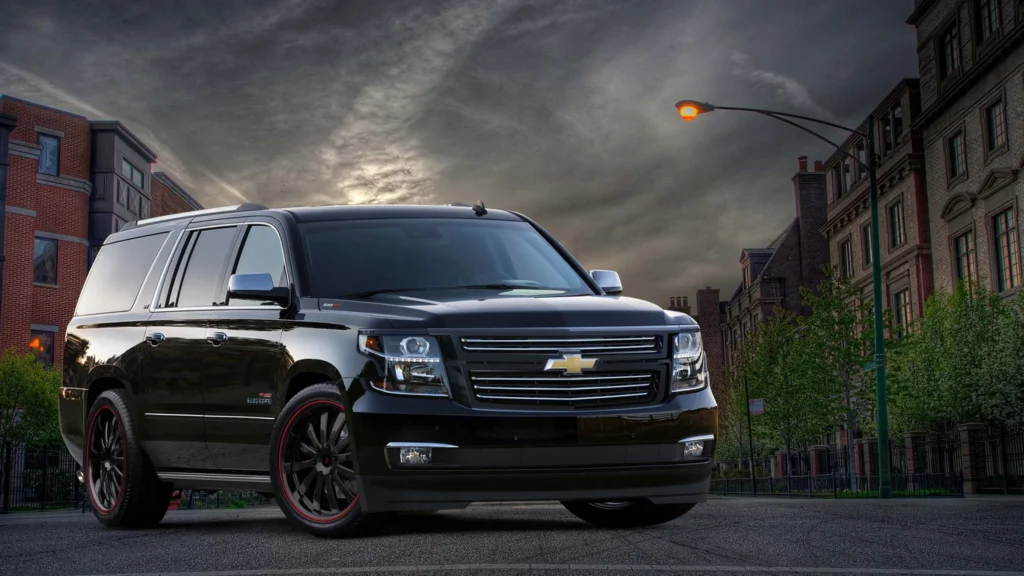
Like the Tahoe, the Suburban benefits from the post-2021 redesign, offering a more composed ride, better interior materials, and improved technology. The trade-off is size. It’s long, heavy, and less maneuverable in tight areas.
Fuel economy also trails smaller SUVs. Still, for tall drivers who prioritize interior comfort above all else—and especially those who need true third-row usability—the Suburban remains unmatched.
3. 2026 GMC Yukon & Yukon XL
- Price: $72,395–$106,695
- Front Headroom: 42.3 in.
- Front Legroom: 44.5 in.
The GMC Yukon shares its platform with the Tahoe but presents a slightly more premium interpretation. Front-seat legroom and headroom are nearly identical, making it just as accommodating for tall drivers.
The Yukon XL, like the Suburban, adds extra rear-seat space, benefiting taller passengers in the third row.
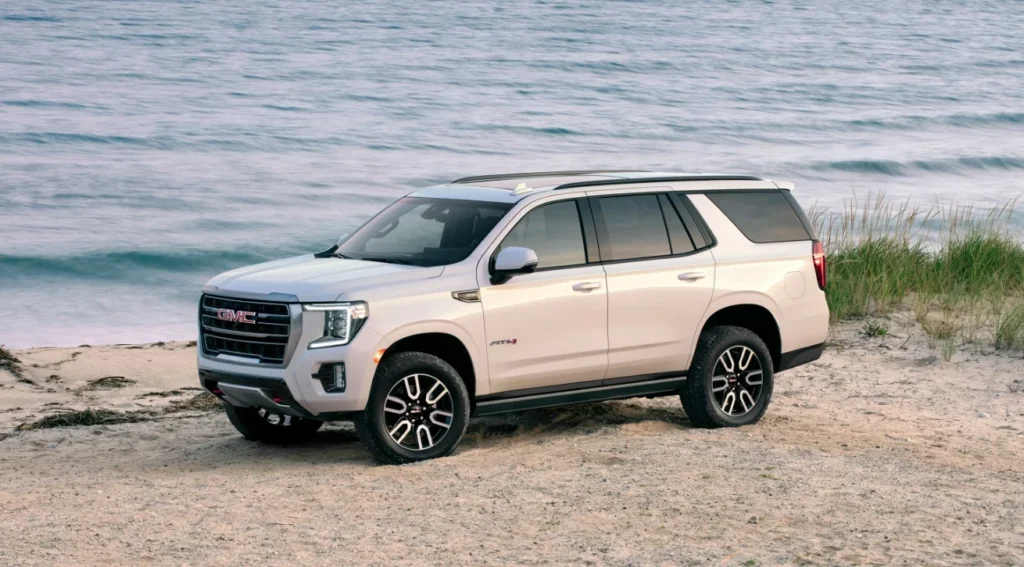
Where the Yukon distinguishes itself is interior finish and ride refinement, especially in higher trims. The seats offer excellent thigh support, and the steering wheel has a wide range of adjustment.
However, pricing climbs quickly with options, and fuel economy remains a concern. It’s not recommended for buyers who don’t need the added size or premium feel, but for tall drivers seeking space with a more upscale atmosphere, it’s a strong alternative to the Chevy twins.
4. 2026 Ford F-150
- Price: $39,885–$75,500
- Front Headroom: 40.8 in.
- Front Legroom: 43.9 in.
For very tall drivers, especially those over 6’5”, the Ford F-150 remains one of the most forgiving vehicles on the road. The cabin is wide, seat travel is extensive, and the upright driving position reduces strain on hips and knees.
Headroom is generous across trims, and the steering wheel telescopes far enough to accommodate long arms comfortably.
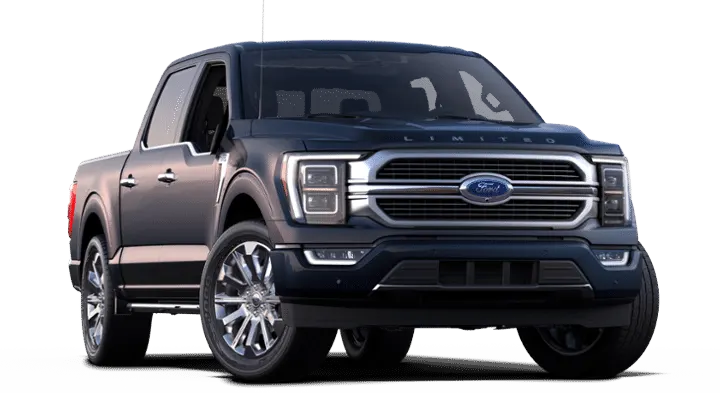
The F-150 excels on long drives, where its relaxed seating geometry minimizes fatigue. However, it’s not ideal for buyers who don’t need truck capability. Parking and fuel costs are higher than car-based alternatives.
Still, if comfort is the top priority and size isn’t a dealbreaker, the F-150 is one of the easiest vehicles for tall drivers to live with.
5. 2026 Honda Accord
- Price: $29,590–$40,690
- Front Headroom: 39.5 in.
- Front Legroom: 42.3 in.
Among sedans, the Honda Accord remains one of the most reliable choices for tall drivers. Its long wheelbase allows the seat to slide far back while maintaining a low, comfortable driving position. Steering wheel reach is excellent, which helps tall drivers avoid slouching forward.
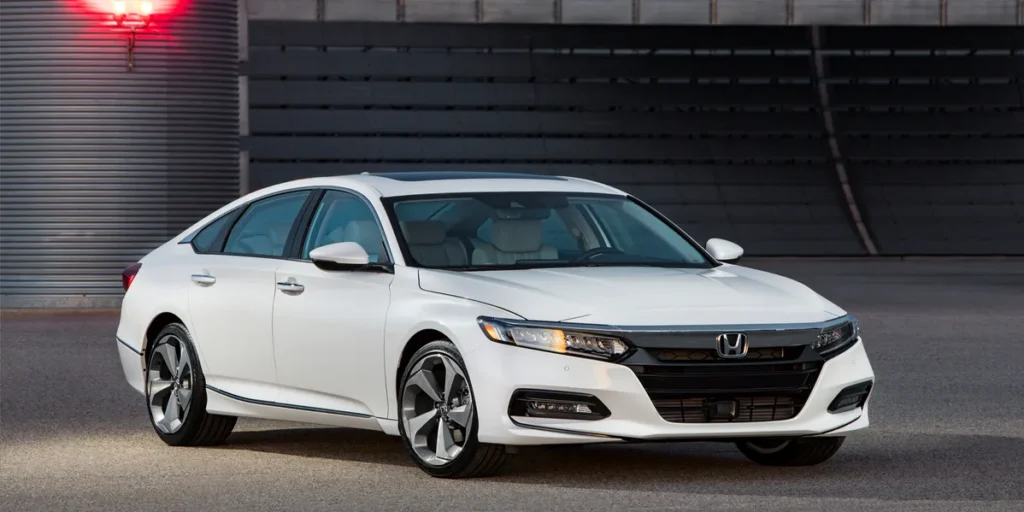
Headroom is generous in non-sunroof trims, though panoramic roofs reduce clearance slightly. The Accord doesn’t feel oversized, yet it offers more usable space than many larger vehicles.
It’s not recommended for drivers who want SUV ride height, but for tall drivers who prefer sedans, it remains one of the best-balanced options available.
6. 2026 Subaru Outback
- Price: $36,445–$49,445
- Front Headroom: 40.2 in.
- Front Legroom: 43.0 in.
The Subaru Outback works well for tall drivers because of its upright roofline and relaxed seating geometry. The seat height opens up knee angles, and headroom remains generous even with a sunroof. Steering wheel adjustment is adequate, and visibility is excellent.
It’s not as plush as full-size SUVs, but it’s far easier to maneuver and more fuel-efficient. Not recommended for drivers who prefer low seating positions or sporty driving, but for tall drivers who value comfort and all-weather capability, it’s a practical choice.
7. 2026 Hyundai Palisade
- Price: $41,035–$58,160
- Front Headroom: 41.5 in.
- Front Legroom: 44.2 in.
The Hyundai Palisade focuses heavily on seating comfort, which benefits tall drivers more than raw dimensions suggest. The driver’s seat lowers sufficiently, thigh support is strong, and the steering wheel offers good reach. Even with a sunroof, headroom remains respectable.
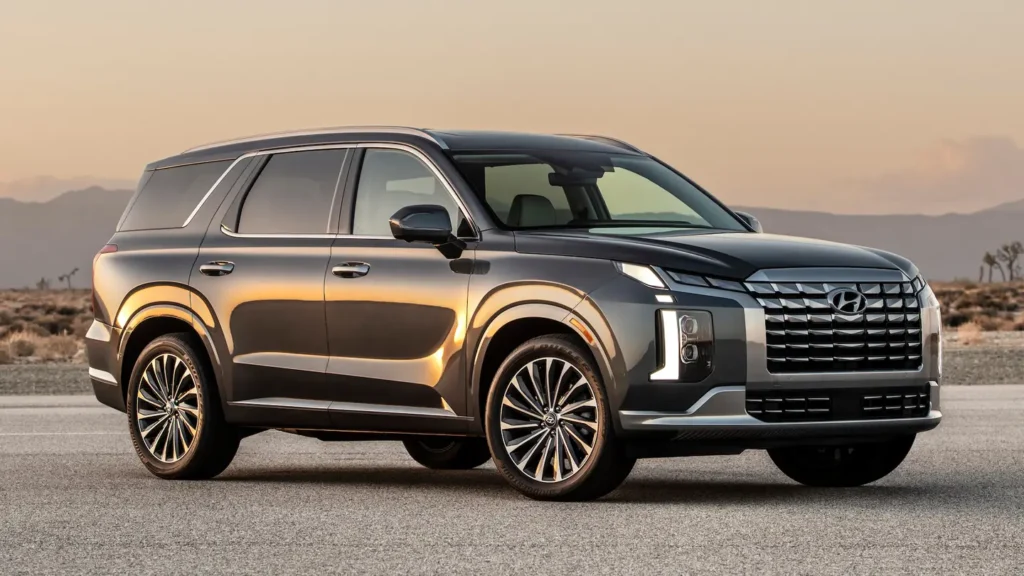
It’s not compact, and city driving can feel cumbersome, but for tall families or drivers who prioritize comfort and visibility, it delivers consistent usability.
Common mistakes tall buyers should avoid
- Choosing sloped-roof “sporty” designs
- Ignoring steering wheel reach
- Assuming all SUVs fit tall drivers
- Skipping long test drives
FAQs
Are trucks better than SUVs for tall drivers?
Often yes, due to upright seating and longer seat tracks.
Do sunroofs reduce headroom?
Yes—sometimes significantly.
Is legroom more important than headroom?
Both matter, but poor headroom affects posture more quickly.
Conclusion
For tall drivers, the best vehicle isn’t always the largest—it’s the one that allows natural posture, relaxed joints, and clear visibility. When seating geometry is right, driving becomes easier, safer, and far less tiring. Focus on fit first, and the right vehicle will stand out immediately.