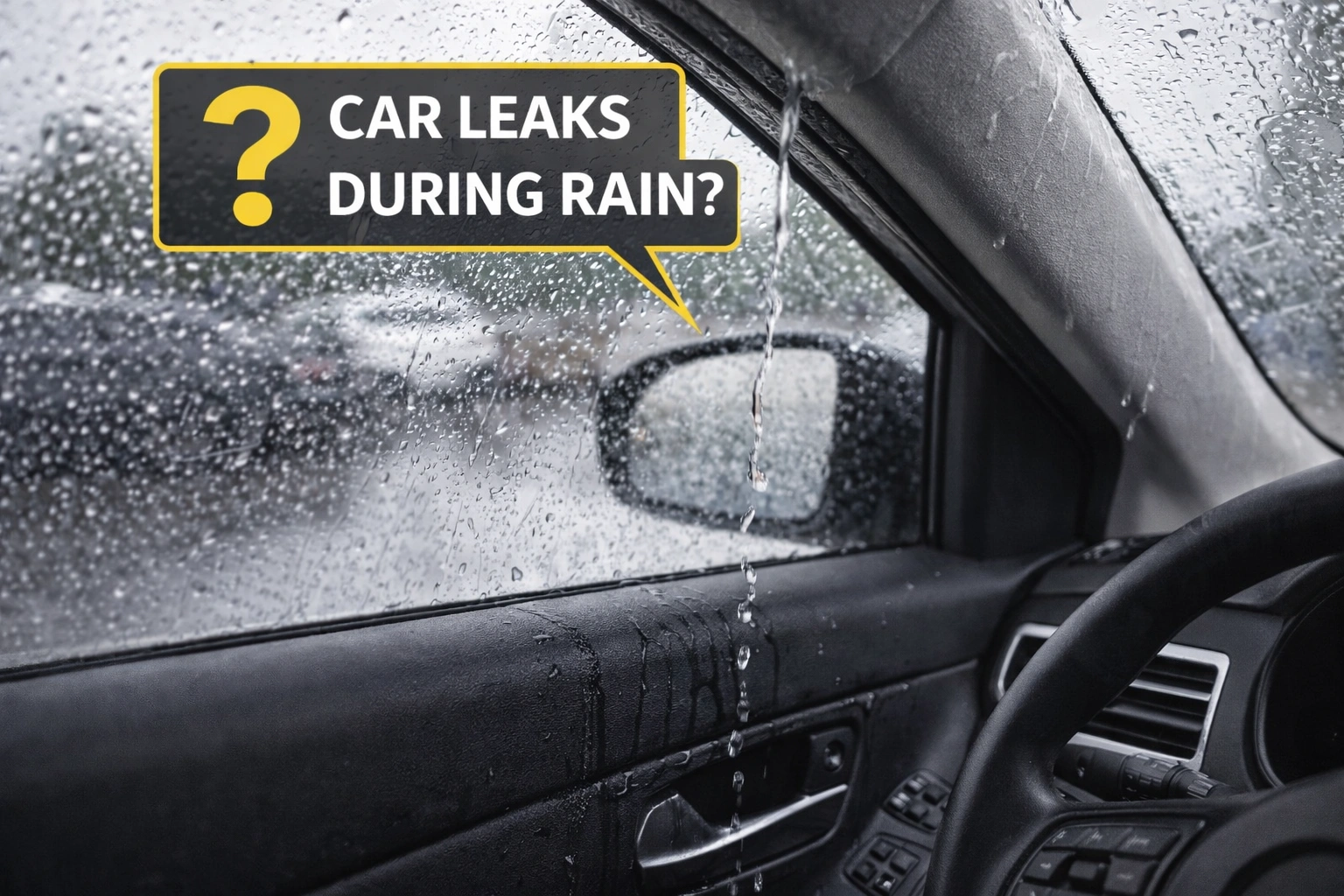
Rain should never make its way inside a vehicle. Modern cars are designed with layered seals, drainage channels, and tight body panels to keep the cabin dry. Yet many owners discover damp carpets, water dripping from pillars, or fogged windows after a storm. Water intrusion is more than a minor inconvenience. It can damage electrical systems, create mold growth, and weaken interior materials over time.
When a car leaks during rain, the problem usually traces back to worn seals, clogged drains, or body panel gaps. The source is not always obvious because water can travel along hidden channels before appearing inside the cabin. Identifying the entry point requires careful inspection and patience. Fixing leaks early prevents corrosion, unpleasant odors, and costly electronic repairs. A clear understanding of common causes helps narrow down the problem and restore a dry, secure interior.
Common Entry Points For Rainwater
Worn Door And Window Seals
Door and window seals form the first barrier against rain. These rubber weatherstrips compress when the door closes, creating a tight seal. Over time, exposure to sunlight and temperature changes causes rubber to crack or harden.
When seals lose flexibility, gaps develop. Rainwater may seep past the edges and run down the interior door panel.
Vehicles such as the Honda Accord and Toyota Camry rely on precise seal alignment to prevent leaks.
Replacing damaged weatherstripping restores proper protection.
Regular inspection helps identify brittle or torn rubber early.
Windshield And Rear Glass Seal Failure
Windshields and rear windows are bonded to the vehicle frame using adhesive sealant. If that sealant weakens or cracks, water can enter around the glass edges.
Leaks near the dashboard or rear parcel shelf often originate from this area.
Improper windshield replacement may also create gaps if adhesive application was uneven.
Professional resealing may be required to correct this issue.
Ignoring small leaks can allow rust to form around the frame.
Sunroof And Drainage System Problems
Clogged Sunroof Drain Tubes
Vehicles equipped with sunroofs include drain tubes that channel water away from the roof opening. These tubes run through pillars and exit underneath the vehicle.
Leaves, dirt, and debris can clog these drains. When blocked, water overflows into the headliner and drips into the cabin.
SUVs like the Ford Escape commonly use this drainage design.
Clearing drain tubes with compressed air or flexible line often resolves the issue.
Routine cleaning prevents buildup.
Damaged Sunroof Seal
The sunroof itself has a rubber seal that limits water intrusion. While not completely watertight, it directs water toward drain channels.
If the seal tears or becomes misaligned, excessive water may bypass drains.
Replacing a worn seal restores proper guidance of rainwater.
Ensuring the sunroof closes fully also prevents gaps.
Careful maintenance reduces risk of interior damage.
Body Panel And Structural Leak Sources
Firewall And Cabin Air Intake Leaks
The firewall separates the engine bay from the cabin. Small openings allow wiring and hoses to pass through. If rubber grommets degrade, water can seep inside.
Additionally, the cabin air intake located near the windshield may accumulate debris. Blocked drainage in this area can cause water to enter through ventilation systems.
Vehicles like the Chevrolet Silverado 1500 have multiple access points near the cowl area.
Cleaning debris regularly keeps water flowing away from sensitive components.
Sealing damaged grommets prevents leaks from engine bay areas.
Trunk And Tail Light Seal Issues
Water pooling in the trunk often points to tail light seal failure. Gaskets around tail light assemblies prevent rain from entering through mounting points.
If these gaskets crack or compress unevenly, water may leak into the trunk floor.
Replacing foam or rubber seals usually corrects the problem.
Checking trunk weatherstripping for tears also helps eliminate entry points.
Drying the area thoroughly prevents mold growth.
Long Term Effects Of Water Intrusion
Persistent water leaks can damage electrical connectors located under carpets or seats. Corrosion may cause warning lights or malfunctioning sensors.
Moisture trapped in insulation creates unpleasant odors and mold growth.
Rust may develop along floor pans or frame rails if water remains unnoticed.
Prompt repair prevents larger structural problems.
Interior drying with fans and dehumidifiers reduces moisture retention.
Protecting the cabin ensures long term reliability.
Car leaks during rain typically result from worn seals, clogged sunroof drains, damaged glass adhesive, or body panel gaps. Identifying the entry point requires careful inspection of weatherstripping, drainage systems, and sealing components.
Addressing leaks quickly prevents electrical damage, rust formation, and interior deterioration. Maintaining seals and keeping drainage areas clear ensures the cabin remains dry even during heavy rainfall.