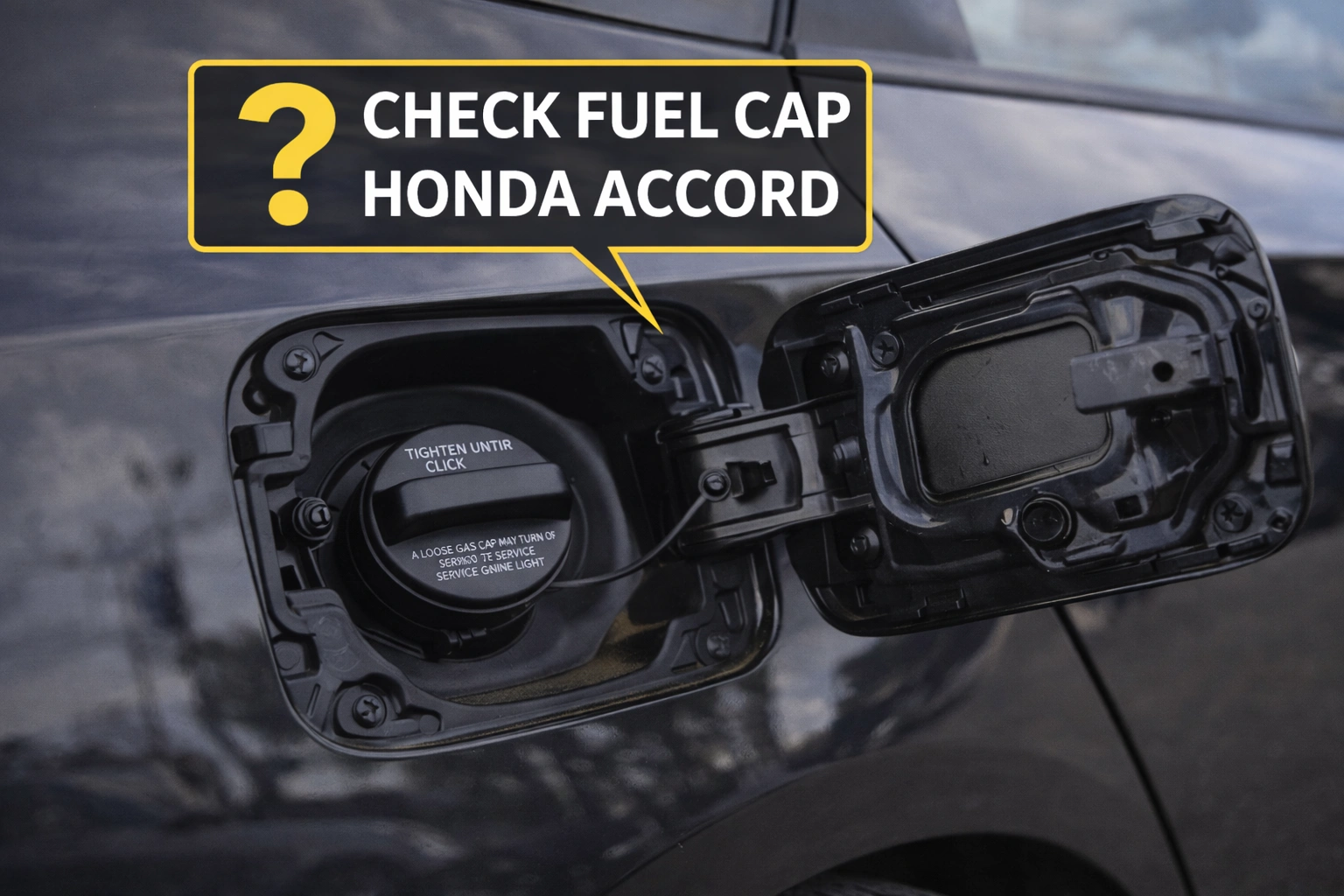
Modern vehicles rely on complex emission control systems to manage fuel vapors and reduce pollution. When a message such as “Check Fuel Cap” appears on the dashboard of a Honda Accord, it often causes concern. The warning may seem minor at first glance, yet it connects directly to the evaporative emission control system, which prevents fuel vapors from escaping into the atmosphere. A loose, damaged, or improperly sealed fuel cap can trigger this alert.
The fuel cap does more than simply close the fuel tank. It helps maintain proper pressure within the system and supports emission compliance. When the vehicle detects a pressure leak or abnormal vapor flow, it activates the warning. In many cases, tightening or replacing the cap resolves the issue. However, persistent warnings may point to deeper problems within the emission system. Identifying the cause ensures proper repair and continued engine performance.
What The Check Fuel Cap Message Really Means
Role Of The Evaporative Emission Control System
The evaporative emission control system, often called the EVAP system, captures fuel vapors from the tank and stores them in a charcoal canister. These vapors are later redirected into the engine for combustion instead of being released into the air.
The fuel cap plays a key role in sealing the system. If it does not close properly, vapor leaks occur. Sensors detect pressure changes and send signals to the engine control module.
When the system identifies a leak, the vehicle displays the “Check Fuel Cap” message. This warning is designed to alert the driver early before larger emission problems develop.
Proper sealing keeps the system functioning as intended.
How The Warning Is Triggered
When the fuel cap is loose or missing, the system fails its internal pressure test. The vehicle periodically checks for leaks during operation.
A loose cap may cause a small leak code to register. The dashboard message appears to prompt inspection.
In some cases, the warning may remain even after tightening the cap until the system completes another self test.
Understanding this process helps prevent unnecessary concern.
Most cases involve simple fixes rather than major repairs.
Common Causes Behind The Warning
Loose Or Improperly Installed Fuel Cap
The most frequent cause of the warning is a fuel cap that was not tightened properly after refueling. The cap should be turned until it clicks several times to ensure a tight seal.
If it is not secured correctly, the system detects vapor leakage.
After tightening the cap, driving for a few cycles may allow the system to reset itself.
This quick check often resolves the issue without further action.
Ensuring the cap clicks securely prevents repeat warnings.
Damaged Or Worn Fuel Cap Seal
Over time, the rubber gasket inside the fuel cap can crack or degrade. A worn seal prevents airtight closure.
Even if the cap appears tight, a damaged seal allows vapor escape.
Replacing the fuel cap is inexpensive and simple.
Using an original equipment replacement ensures proper fit and pressure regulation.
Regular inspection of the gasket during refueling can help identify wear early.
Other Potential EVAP System Issues
Faulty Vapor Lines Or Canister
If tightening or replacing the cap does not clear the warning, other components in the EVAP system may be responsible.
Cracked vapor hoses or a malfunctioning charcoal canister can create leaks.
Sensors monitor system pressure and trigger warnings when abnormalities occur.
Professional diagnostic scanning can identify specific fault codes.
Timely inspection prevents prolonged emission issues.
Malfunctioning EVAP Purge Valve
The purge valve controls when stored vapors enter the engine for combustion. If it sticks open or closed, pressure imbalances occur.
A faulty purge valve may trigger similar dashboard messages.
Testing the valve requires diagnostic equipment and inspection.
Replacing a defective valve restores proper vapor flow.
Accurate diagnosis avoids unnecessary part replacement.
Steps To Fix The Check Fuel Cap Message
Start by removing the fuel cap and inspecting the gasket for cracks or debris.
Reinstall the cap, turning it until multiple clicks are heard.
Drive the vehicle for several cycles to allow the system to retest.
If the warning persists, consider replacing the cap with a compatible unit.
Persistent messages may require professional diagnostic testing to inspect EVAP hoses and valves.
Clearing codes without fixing the issue will cause the message to return.
Addressing the root cause ensures reliable system operation.
The “Check Fuel Cap” message in a Honda Accord usually indicates a loose or faulty fuel cap affecting the evaporative emission control system. In many cases, tightening or replacing the cap resolves the warning quickly.
If the alert continues, other EVAP components such as hoses or purge valves may require inspection. Maintaining proper sealing within the fuel system supports emission compliance and keeps the vehicle operating efficiently.