An engine generates a tremendous amount of heat every time it runs. Without an effective cooling system, internal components would quickly overheat and suffer severe damage. The radiator plays a central role in maintaining proper temperature by circulating coolant through the engine and releasing excess heat. Over time, however, old coolant begins to break down and contaminants accumulate inside the system. Rust particles, mineral deposits, and degraded coolant can restrict flow and reduce cooling efficiency.
Flushing the radiator removes these contaminants and replaces old coolant with fresh fluid. This maintenance procedure helps the cooling system operate efficiently and protects engine components from corrosion and overheating. Many vehicle owners overlook this service until overheating problems appear. Performing a radiator flush at recommended intervals keeps the system clean and functioning properly. The process involves draining old coolant, cleaning the cooling passages, and refilling the system with new coolant designed for the vehicle.
Role Of The Radiator In Engine Temperature Control
How The Cooling System Circulates Coolant
The cooling system functions as a continuous circulation loop. Coolant travels through the engine block, absorbing heat produced during combustion. Once heated, the fluid flows into the radiator where air passing through the fins removes excess heat.
A water pump pushes coolant through hoses, passages, and the radiator core. As the fluid cools, it returns to the engine to repeat the cycle. This circulation prevents engine components from reaching damaging temperatures.
Vehicles such as the Toyota Camry rely on precise coolant flow to maintain stable operating temperatures. If the coolant becomes contaminated or loses its protective properties, circulation efficiency declines.
Keeping the radiator clean ensures that coolant continues to move freely through the system.
Why Old Coolant Needs To Be Replaced
Coolant contains additives that prevent corrosion and lubricate water pump components. Over time these additives wear out. Once degraded, the coolant becomes less effective at protecting metal surfaces inside the engine.
Old coolant may also accumulate rust and debris from internal engine parts. These particles settle inside radiator passages and restrict flow. Reduced flow limits heat transfer, which can lead to overheating during heavy engine operation.
Vehicles like the Honda Accord depend on clean coolant to maintain proper thermal balance.
Flushing the radiator removes contaminated fluid and restores the cooling system’s ability to regulate temperature effectively.
Signs That Indicate A Radiator Flush Is Needed
Engine Running Warmer Than Normal
A rising temperature gauge often signals cooling system issues. When coolant passages become restricted by debris or sludge, heat transfer decreases. The radiator struggles to release heat efficiently, causing the engine temperature to climb.
Drivers may notice the temperature gauge moving higher than usual during long drives or while idling in traffic. While several issues can cause overheating, contaminated coolant is a common factor.
Vehicles such as the Ford Escape may exhibit temperature fluctuations when cooling system maintenance is overdue.
A radiator flush removes buildup and restores proper coolant flow, helping the engine maintain normal operating temperature.
Discolored Or Contaminated Coolant
Healthy coolant typically appears bright green, orange, or pink depending on the formulation used by the manufacturer. Over time, the fluid may darken or develop a muddy appearance.
Rust colored coolant indicates internal corrosion within the cooling system. Sludge formation suggests that coolant additives have deteriorated and debris has accumulated inside the radiator.
Vehicles such as the Nissan Altima may show these signs when coolant has been left unchanged for extended periods.
Checking coolant condition during routine maintenance helps identify when a flush is necessary.
Step By Step Process For Flushing A Radiator
Draining The Old Coolant Safely
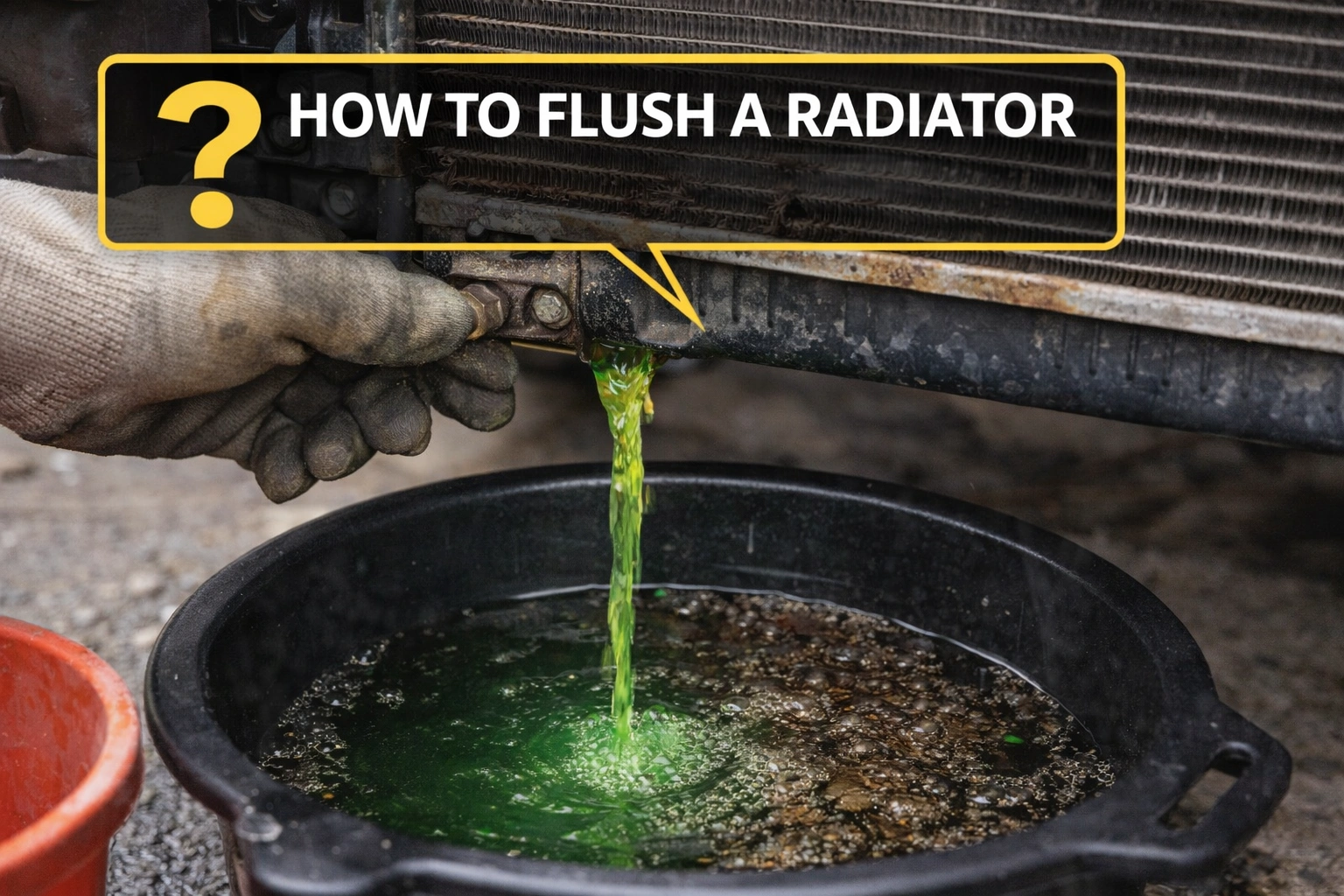
The first step in flushing a radiator involves draining the old coolant from the system. The engine should be completely cool before beginning this process to prevent burns from hot coolant.
A drain pan is placed beneath the radiator drain valve, commonly known as the petcock. Opening the valve allows coolant to flow out of the radiator and into the container. Some vehicles also require removing the lower radiator hose to fully empty the system.
Vehicles such as the Chevrolet Malibu include drain valves designed to simplify this procedure.
Collecting old coolant properly is important because coolant contains chemicals that must be disposed of responsibly.
Flushing The System With Clean Water
After draining the old coolant, the system is flushed using clean water. Water is poured into the radiator and allowed to circulate through the system.
The engine may be started briefly to help water move through the radiator, heater core, and engine passages. This process loosens debris and carries contaminants out of the system.
Once circulation is complete, the water is drained again to remove loosened particles. Multiple flush cycles may be performed until the drained water appears clear.
Vehicles such as the Hyundai Elantra benefit from thorough flushing that clears deposits from cooling passages.
This step prepares the system for fresh coolant.
Refilling And Maintaining The Cooling System
Adding Fresh Coolant Mixture
After flushing is complete, the radiator is refilled with a mixture of coolant and distilled water. The correct ratio is typically fifty percent coolant and fifty percent water, though manufacturer recommendations may vary.
The mixture provides both heat transfer efficiency and corrosion protection. Using distilled water prevents mineral deposits from forming inside the radiator.
Vehicles such as the Toyota RAV4 require coolant formulas designed specifically for their engine materials.
Filling the radiator slowly helps prevent air pockets from forming in the system.
Removing Air From The Cooling System
Air trapped inside the cooling system can reduce coolant circulation and cause temperature fluctuations. After refilling the radiator, the engine is started and allowed to reach operating temperature.
During this process, the thermostat opens and coolant begins circulating throughout the system. Any trapped air bubbles escape through the radiator cap or expansion tank.
Vehicles such as the Subaru Outback sometimes require bleeding procedures to ensure all air is removed from the cooling system.
Proper bleeding ensures consistent coolant flow and stable engine temperature.
Flushing a radiator removes contaminated coolant, clears debris from internal passages, and restores efficient heat transfer within the cooling system. This maintenance procedure helps prevent overheating, corrosion, and costly engine repairs.
Performing regular coolant service ensures the radiator continues functioning as designed. Clean coolant, proper mixture ratios, and routine inspection keep the engine operating within safe temperature limits and support long term vehicle reliability.