
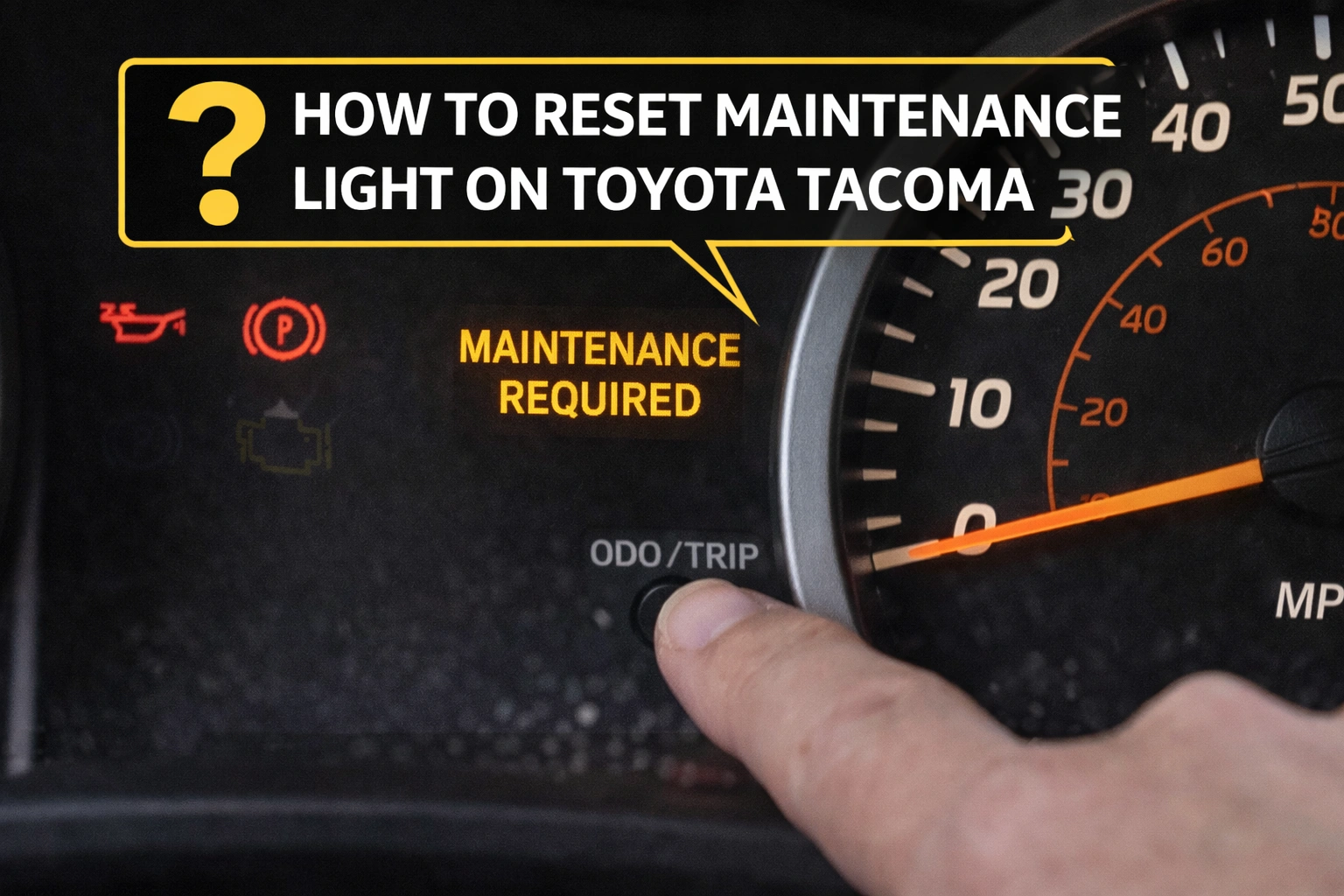
The maintenance light on a vehicle serves as a simple but important reminder. In the Toyota Tacoma, this light typically appears to alert the owner that routine service such as an oil change is due. It does not usually indicate a mechanical failure. Instead, it functions as a mileage based reminder set by the vehicle’s internal system. Even after completing service, the light will remain on until it is manually reset.
Many Tacoma owners feel concerned when the maintenance required message stays illuminated after fresh oil and filter replacement. The reset procedure is straightforward, but it varies slightly depending on the model year and instrument cluster design. Knowing the correct method ensures the system tracks the next service interval accurately. Resetting the reminder properly keeps maintenance schedules organized and prevents confusion about upcoming service needs.
Understanding The Toyota Tacoma Maintenance Reminder System
Difference Between Maintenance Light And Check Engine Light
The maintenance light in the Toyota Tacoma is not the same as the check engine light. The maintenance reminder is mileage based and appears after a preset number of miles, often around 5,000 miles. It is designed primarily to remind the driver about routine oil service.
The check engine light, on the other hand, indicates a potential problem detected by the engine control system. It may signal issues related to sensors, emissions, or performance.
Recognizing this distinction prevents unnecessary worry. If the maintenance light is the only indicator illuminated, the system is likely functioning normally as a reminder rather than signaling a malfunction.
Resetting the maintenance light does not clear diagnostic trouble codes.
How The System Tracks Service Intervals
Toyota engineers designed the Tacoma maintenance reminder to operate based on mileage tracking. Once the vehicle reaches a preset interval, the system activates the reminder.
This process occurs regardless of actual oil condition. The system does not analyze oil quality directly. Instead, it relies on accumulated mileage to determine when service is due.
For most Tacoma models, the reminder appears every 5,000 miles. This interval aligns with common oil change recommendations, though actual service needs may vary depending on oil type and driving habits.
Resetting the light restarts the mileage countdown for the next service cycle.
Reset Procedure For Older Toyota Tacoma Models
Using The Trip Meter Button Method
In many Tacoma models produced before advanced digital clusters, resetting the maintenance light involves using the trip meter button.
Begin by turning the ignition switch to the off position. Press and hold the trip meter reset button located on the instrument cluster. While holding the button, turn the ignition to the on position without starting the engine.
Continue holding the button until the odometer display shows a series of dashes that gradually disappear. Once the display returns to normal, release the button.
This process resets the maintenance reminder and restarts the mileage tracking cycle.
Ensuring the correct ignition position is essential for successful reset.
Confirming The Reset Was Successful
After completing the reset procedure, turn the ignition off and then start the engine normally. Observe the instrument panel to confirm that the maintenance required message no longer appears.
If the light remains illuminated, repeat the process carefully, ensuring the trip meter displays total mileage rather than trip A or trip B before beginning.
Patience during the reset sequence prevents errors.
Proper confirmation ensures the system accurately tracks the next service interval.
Reset Procedure For Newer Tacoma Models With Multi Information Display
Navigating The Instrument Panel Menu
Newer Toyota Tacoma models include a multi information display controlled by steering wheel buttons. In these models, resetting the maintenance reminder involves navigating through menu options.
Turn the ignition to the on position. Use the steering wheel controls to access the settings menu within the instrument cluster. Scroll to the maintenance or vehicle settings option.
Select the maintenance reset function and confirm the reset when prompted. The display should indicate that the service interval has been reset successfully.
This digital process replaces the older trip button method in updated Tacoma models.
Following menu instructions carefully ensures proper completion.
Verifying The Maintenance Interval Reset
After confirming the reset, cycle the ignition off and back on. Check that the maintenance required message does not reappear during startup.
Navigate back into the vehicle settings menu to verify that the service interval has been reset to zero miles since last maintenance.
Accurate verification ensures the reminder will activate at the correct next interval.
This step prevents confusion about service scheduling later.
Common Mistakes During Maintenance Light Reset
One frequent mistake involves attempting to reset the maintenance light without completing the oil change. Resetting without performing service may lead to missed maintenance intervals.
Another issue occurs when drivers confuse the maintenance reminder with the check engine light. Resetting the maintenance light will not resolve engine fault codes.
Incorrect ignition positioning during the reset process can also prevent success. Carefully following the sequence ensures proper function.
Maintaining a record of service dates and mileage helps track maintenance independently of the reminder system.
Attention to detail avoids unnecessary frustration.
Resetting the maintenance light on a Toyota Tacoma is a simple process that depends on model year and instrument cluster design. Older models use the trip meter button method, while newer versions rely on digital menu navigation.
The maintenance reminder serves as a mileage based alert for routine service and does not indicate mechanical failure. Completing service before resetting ensures accurate tracking of future intervals. Proper reset procedure keeps the system aligned with scheduled maintenance and supports long term vehicle reliability.