
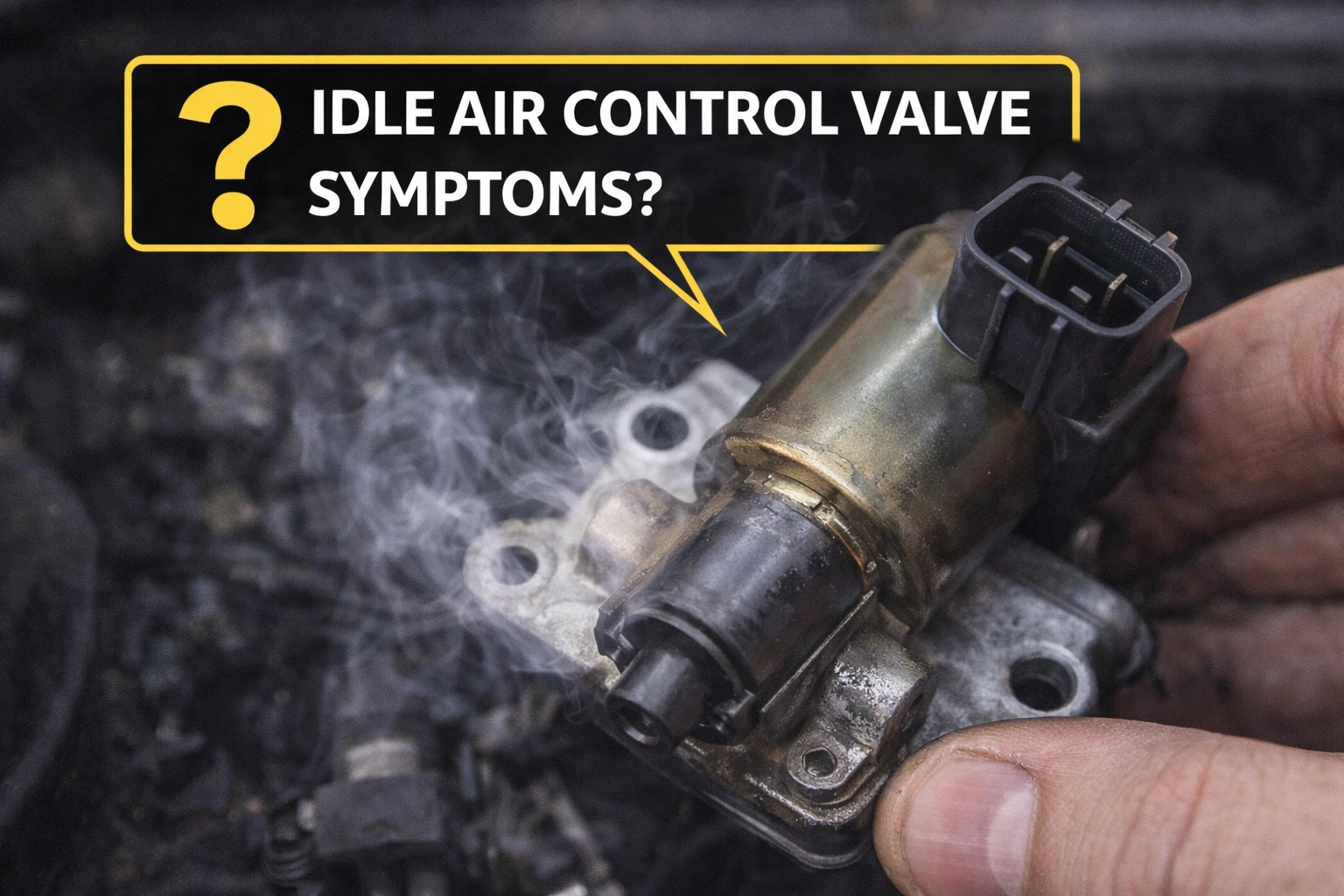
A smooth idle is one of the simplest signs that an engine is operating correctly. When a vehicle sits at a traffic light or warms up in the driveway, the engine should maintain a steady speed without shaking or stalling. Behind that stability is a small but important component called the idle air control valve. This device manages how much air enters the engine when the throttle is closed, allowing the engine to maintain a balanced idle speed.
When the idle air control valve begins to fail or becomes dirty, the engine loses that balance. Idle speed may fluctuate, the engine may stall unexpectedly, or the vehicle may struggle to start. These symptoms often appear gradually and can be mistaken for other issues such as vacuum leaks or fuel problems. Recognizing the early warning signs helps prevent unnecessary repairs and keeps the engine running smoothly. A closer look at this component and its symptoms reveals why it plays such a critical role in everyday vehicle operation.
Purpose Of The Idle Air Control Valve In Engine Operation
How Idle Speed Is Regulated In Modern Engines
When the accelerator pedal is not pressed, the throttle plate inside the throttle body remains mostly closed. Even with the throttle closed, the engine still needs a small amount of air to keep running. The idle air control valve provides that airflow by allowing air to bypass the throttle plate.
The engine control module monitors various sensors and adjusts the valve opening to maintain stable engine speed. For example, when the air conditioner turns on or when the engine is cold, the computer commands the valve to allow more air. This prevents the engine from stalling under additional load.
Vehicles such as the Toyota Corolla and Honda Civic rely on this system to maintain consistent idle behavior. Without proper airflow control, the engine would struggle to maintain steady RPM while stopped.
The valve acts as a precise airflow regulator that keeps the engine balanced during idle conditions.
Interaction Between Sensors And Engine Control Module
The idle air control valve does not operate independently. It works alongside sensors such as the throttle position sensor, coolant temperature sensor, and mass airflow sensor. These sensors provide data to the engine control module about engine conditions.
When the engine is cold, the control module commands the idle air control valve to increase airflow slightly. This raises engine speed during warm up. As the engine reaches operating temperature, airflow is reduced to normal idle levels.
Vehicles like the Ford Focus depend on this electronic communication to keep idle speed stable in different situations. Even turning the steering wheel or switching on headlights may prompt the control module to adjust airflow.
The system continuously makes small adjustments to maintain smooth engine operation.
Common Symptoms Of A Failing Idle Air Control Valve
Irregular Idle Speed And Engine Surging
One of the most noticeable symptoms of a faulty idle air control valve is fluctuating idle speed. The engine may suddenly increase and decrease RPM without any driver input. This behavior often appears as engine surging while the vehicle is stopped.
Instead of maintaining a stable idle, the engine may rev up slightly and then drop back down repeatedly. This occurs when the valve cannot regulate airflow accurately. The engine control module attempts to correct the imbalance, but airflow remains inconsistent.
Drivers of vehicles such as the Nissan Altima sometimes notice this issue when waiting at traffic lights or during warm up.
Inconsistent idle speed often indicates that the valve is either sticking due to carbon buildup or experiencing electrical failure.
Engine Stalling At Stops
Another common symptom is engine stalling when the vehicle comes to a stop. If the idle air control valve fails to allow enough air into the engine, the air fuel mixture becomes insufficient to keep the engine running.
When this occurs, the engine may stall as the vehicle slows down or when the driver releases the accelerator. Restarting the engine may temporarily resolve the issue until the next stop.
Vehicles such as the Chevrolet Malibu can exhibit stalling behavior when idle airflow becomes restricted.
Repeated stalling is not only inconvenient but also potentially unsafe in traffic conditions. Addressing the issue quickly helps prevent unexpected shutdowns.
Causes Behind Idle Air Control Valve Failure
Carbon Deposits And Contamination
Over time, carbon deposits accumulate inside the throttle body and idle air control valve. These deposits originate from fuel vapors and combustion byproducts circulating through the intake system.
As carbon buildup increases, the valve may become partially blocked or stick in a fixed position. This prevents smooth airflow adjustment and leads to unstable idle conditions.
Vehicles such as the Hyundai Elantra can develop this issue after many miles of operation, particularly if the throttle body has not been cleaned regularly.
Cleaning the valve and throttle body can sometimes restore proper function if contamination is the primary cause.
Electrical Malfunction Or Sensor Communication Issues
The idle air control valve is typically operated by a small electric motor or solenoid. Electrical faults within this mechanism may prevent the valve from responding correctly to commands from the engine control module.
Damaged wiring, faulty connectors, or internal motor failure may cause the valve to remain stuck open or closed. When this occurs, idle speed becomes unpredictable.
Vehicles such as the Jeep Wrangler depend on accurate electrical signals for proper idle control. Any disruption in communication between sensors and the control module can affect valve operation.
Electrical testing helps determine whether replacement is necessary.
Diagnosing And Fixing Idle Air Control Valve Problems
Inspection And Diagnostic Testing
Diagnosing idle air control valve issues usually begins with scanning the vehicle for diagnostic trouble codes. Codes related to idle control system performance may indicate airflow regulation problems.
Technicians often inspect the throttle body and valve for visible carbon buildup. If deposits are present, cleaning may restore normal operation.
Electrical testing may also be performed to verify that the valve receives proper voltage and responds to control signals from the engine computer.
Vehicles such as the Toyota Camry benefit from careful diagnostic procedures that identify the root cause of idle instability.
Accurate testing prevents unnecessary replacement of unrelated components.
Replacement And Preventive Maintenance
If cleaning does not resolve the issue, replacing the idle air control valve may be necessary. The component is typically mounted on the throttle body or intake manifold and can be accessed with basic tools.
After installation, the engine control module may need to relearn idle parameters. This process allows the computer to adjust airflow settings for stable engine speed.
Routine maintenance such as throttle body cleaning and air filter replacement helps prevent future problems. Clean intake systems allow the valve to operate smoothly without obstruction.
Vehicles like the Subaru Outback benefit from periodic inspection of idle control components to maintain smooth engine operation.
Regular maintenance keeps airflow systems functioning efficiently.
The idle air control valve plays a vital role in maintaining stable engine idle speed. When the valve becomes dirty or fails, symptoms such as fluctuating RPM, stalling, and rough idle may appear.
Early diagnosis and maintenance prevent these symptoms from escalating into larger engine performance problems. Ensuring the valve remains clean and functional supports consistent engine operation and long term reliability.