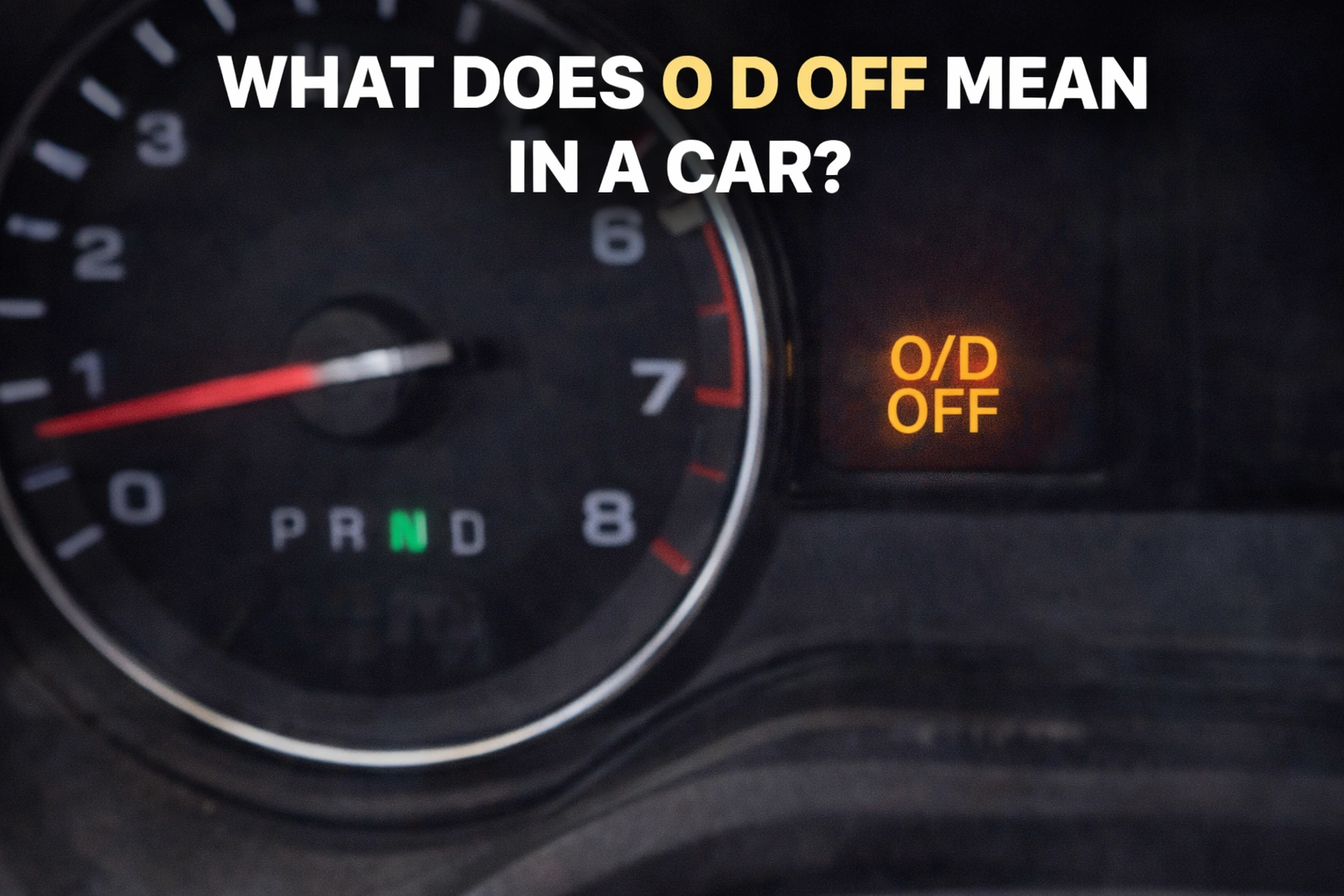
Modern automatic transmissions are designed to shift smoothly through multiple gears without requiring driver input. Among those gears is one called overdrive. Many vehicles include a small button labeled “O/D” on the gear selector or steering column. When pressed, a dashboard indicator may display “O D Off.” That small light often creates confusion.
The overdrive function plays an important role in fuel efficiency and highway cruising. Disabling it changes how the transmission behaves, especially at higher speeds. While the vehicle will still operate normally, gear shifting patterns adjust in ways that can affect engine speed, towing performance, and fuel consumption.
The O D Off indicator is not a warning light for damage. Instead, it informs the driver that the transmission’s highest gear has been temporarily disabled. This guide explains what overdrive does, when to turn it off, and how it impacts performance helps ensure the transmission operates efficiently under different driving conditions.
What Overdrive Means In An Automatic Transmission
Purpose Of The Overdrive Gear
Overdrive is typically the highest gear in an automatic transmission. It allows the engine to run at lower revolutions per minute while maintaining highway speed. This reduces fuel consumption, lowers engine wear, and minimizes noise during long-distance cruising.
In mechanical terms, overdrive means the output shaft of the transmission rotates faster than the engine crankshaft. This ratio reduces engine strain at steady speeds. When overdrive is active, the vehicle achieves better fuel economy on highways and smoother long-distance operation.
Disabling overdrive prevents the transmission from shifting into this highest gear. The engine then runs at slightly higher RPMs, which may be beneficial in certain driving conditions.
How The O D Off Button Works
Pressing the O D button tells the transmission control module to lock out the highest gear. The dashboard indicator lights up to confirm overdrive is disabled.
The vehicle will still shift through lower gears normally. However, it will not enter the overdrive gear. Pressing the button again reactivates overdrive and turns the indicator off.
The system is simple and does not damage the transmission when used appropriately.
When To Use O D Off And Why It Matters
Driving In Hilly Or Mountainous Areas
When driving through hills or steep terrain, frequent gear shifting can occur as the transmission attempts to maintain speed. Constant shifting between overdrive and a lower gear may feel jerky and strain the transmission.
Disabling overdrive keeps the transmission in a lower gear range, providing stronger engine braking and more consistent power delivery. This reduces unnecessary shifting and improves control when climbing or descending slopes.
Using O D Off in such conditions enhances stability and reduces transmission wear from constant gear hunting.
Towing Or Carrying Heavy Loads
Towing trailers or carrying heavy cargo increases engine load. Overdrive is designed for light-load cruising. When towing, using overdrive can cause excessive shifting and increased transmission heat.
Turning overdrive off keeps engine speed slightly higher, allowing more torque delivery and improved power management. This reduces stress on the transmission and enhances towing stability.
Manufacturers often recommend disabling overdrive while towing to protect transmission components.
City Driving With Frequent Stops
In stop-and-go traffic, overdrive may not engage consistently. However, in certain vehicles, disabling overdrive can reduce minor gear transitions at moderate speeds.
City driving generally does not require overdrive, as speeds remain lower than highway cruising. Turning it off may create smoother operation in some cases, though fuel efficiency may slightly decrease.
Drivers should activate overdrive again when returning to highway conditions.
How O D Off Affects Fuel Economy And Engine Performance
Impact On Fuel Consumption
Overdrive reduces engine RPM at cruising speeds. Lower RPM means less fuel burned per minute. Disabling overdrive increases engine speed at highway velocities, leading to slightly higher fuel consumption.
For short trips or heavy-load driving, the difference may be minimal. During extended highway travel, fuel efficiency can noticeably decline when overdrive remains off.
Activating overdrive for steady cruising optimizes economy.
Effect On Engine Noise And Wear
When overdrive is off, engine RPM remains higher at the same speed. Higher RPM produces more engine noise and increased internal motion. While modern engines tolerate higher RPM safely, prolonged operation at elevated speeds may increase wear slightly over time.
Overdrive allows the engine to operate more efficiently during cruising, reducing stress and maintaining quieter performance.
Choosing the correct setting based on road conditions balances efficiency and control.
Is It Safe To Drive With O D Off On All The Time
Everyday Driving Considerations
Driving with overdrive disabled will not immediately harm the vehicle. The transmission is designed to operate safely in lower gears. However, consistently driving at highway speeds without overdrive may increase fuel consumption and engine wear.
For normal daily use, keeping overdrive engaged is typically recommended unless specific conditions require otherwise.
Using O D Off only when necessary ensures optimal efficiency.
Warning Light Confusion
The O D Off indicator is not the same as a transmission warning light. It simply informs the driver that overdrive is disabled.
If additional transmission warning lights appear or shifting becomes rough, separate diagnostic attention is required.
The O D Off light alone does not signal malfunction.
Practical Tips For Using Overdrive Correctly
Activate overdrive for steady highway travel to maximize fuel economy. Disable it when towing, climbing steep hills, or descending long grades.
Avoid frequent manual toggling unless road conditions change. Let the transmission operate automatically in most everyday scenarios.
If uncertain about towing recommendations, consult the vehicle owner’s manual for guidance specific to that model.
Proper use extends transmission life and improves overall efficiency.
The Mechanical Takeaway
O D Off in a car means the transmission’s highest gear, known as overdrive, has been temporarily disabled. This setting adjusts gear behavior to provide better control under load, on steep terrain, or while towing. It does not indicate damage or malfunction.
Overdrive enhances fuel efficiency and reduces engine strain during highway cruising. Disabling it increases engine RPM and improves torque delivery when needed. Selecting the appropriate setting based on driving conditions ensures balanced performance and longevity.
Understanding when to use overdrive and when to turn it off allows the transmission to function as intended, keeping operation smooth, efficient, and reliable across varying road situations.