The cooling system quietly protects an engine every single mile. It controls temperature, prevents metal damage, and keeps performance stable in all weather conditions.
Coolant plays the central role in this system, flowing through passages, hoses, and the radiator to absorb and release heat. Because coolant levels matter so much, many car owners check and top it off themselves. That is where a common mistake happens.
Adding coolant feels harmless. More fluid often sounds safer than less. In reality, overfilling coolant can create problems that are easy to miss at first and costly if ignored.
Unlike engine oil, coolant expands significantly when hot, and the system is designed with precise space for that expansion. When that space disappears, pressure and overflow begin to affect seals, hoses, sensors, and even engine temperature control.
Knowing what happens when coolant is overfilled helps avoid unnecessary repairs and confusion. The effects range from minor leaks to serious overheating issues, depending on how much excess fluid is present and how long the condition continues.
How The Engine Cooling System Is Designed To Work
The cooling system operates as a closed and pressurized loop. Each part has a defined role, and coolant levels are carefully calculated to match system capacity.
Coolant Expansion And Pressure Control
Coolant expands as engine temperature rises. To manage this, vehicles use an expansion or overflow reservoir. This tank allows excess coolant to move out of the radiator as pressure increases and return when the system cools down.
The space above the recommended fill line is intentional. It gives expanding coolant a place to go without stressing hoses or seals.
Radiator Cap Function
The radiator cap controls system pressure. It opens at a specific pressure level, allowing coolant to flow into the reservoir. If coolant is overfilled, the cap cannot regulate pressure properly, leading to forced overflow or leaks.
Why Fill Lines Matter
The “MIN” and “MAX” markings on the reservoir are not suggestions. They are calculated based on expansion volume, operating temperature, and system pressure limits. Filling above the maximum removes the safety buffer the system depends on.
What Happens When Coolant Is Overfilled
Overfilling coolant does not usually cause immediate engine failure, but it creates conditions that lead to gradual problems.
Coolant Overflow And External Leaks
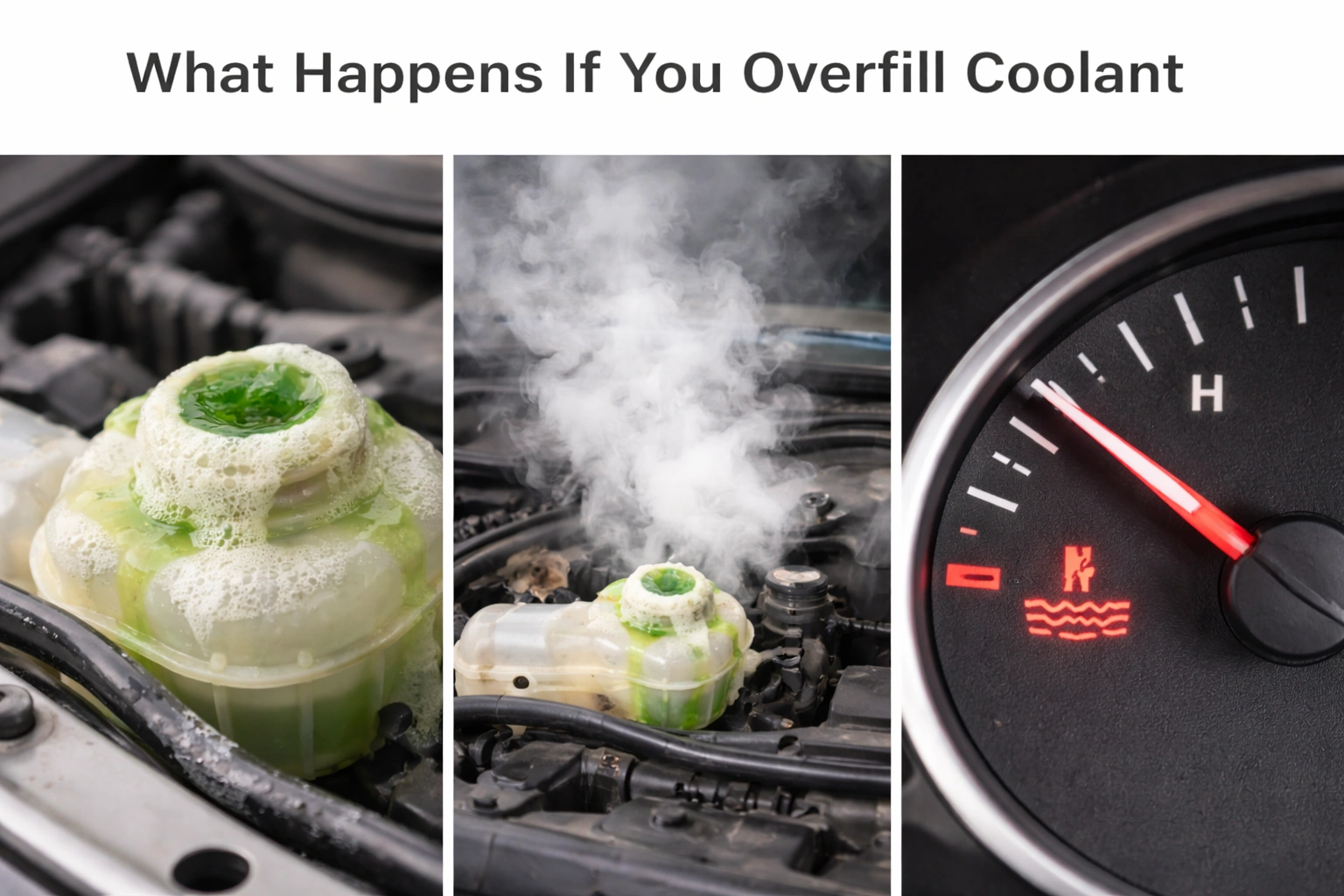
The most common result is coolant being pushed out of the overflow hose. As the engine warms up, excess fluid has nowhere to expand, so it escapes.
This often shows up as:
- Puddles under the car after driving
- Sweet-smelling vapor from the engine bay
- Dried coolant residue near the reservoir or radiator cap
Many drivers mistake this for a leak when the real cause is excess fluid.
Increased System Pressure
Too much coolant raises internal pressure beyond normal limits. Hoses, seals, and plastic fittings are designed for specific pressure ranges. Constant overpressure accelerates wear.
Over time, this can lead to:
- Hose swelling or cracking
- Weakening of plastic tanks
- Premature radiator cap failure
Sensor And Warning Light Issues
Modern vehicles rely on temperature and level sensors. Overfilled coolant can interfere with accurate readings, triggering warning lights or false alerts.
Drivers may see temperature fluctuations or warnings even though the engine itself is not overheating yet.
Reduced Cooling Efficiency
It seems counterintuitive, but excess coolant can reduce cooling efficiency. Proper flow depends on space for expansion and circulation. Overfilling disrupts that balance.
Air pockets can form, and coolant movement becomes less consistent, especially at higher temperatures.
Short Term Vs Long Term Effects Of Overfilled Coolant
The severity depends on how much extra coolant is present and how long the condition lasts.
Short Term Effects
In mild cases, the system simply pushes excess coolant out and stabilizes itself. Once the level drops back into the correct range, symptoms may stop.
Short term signs include:
- Temporary overflow
- Light residue near the reservoir
- No lasting engine temperature change
Long Term Effects
If overfilling continues or is severe, long-term damage becomes possible.
Potential long-term issues include:
- Repeated hose failures
- Cracked expansion tanks
- Radiator damage
- Cooling fan overuse
- Engine overheating under load
Ignoring repeated overflow often leads to misdiagnosed repairs, where parts are replaced without addressing the root cause.
How Overfilled Coolant Can Lead To Overheating
Overfilling does not directly overheat an engine, but it creates conditions that make overheating more likely.
Loss Of Expansion Control
When coolant expands without space, pressure spikes force fluid out. As coolant escapes, overall system volume drops, sometimes below safe levels once the engine cools.
This cycle of overflow and low coolant creates unstable temperature control.
Air Pockets In The System
Excess coolant can trap air during expansion and contraction. Air pockets prevent proper heat transfer, especially around the cylinder head and thermostat.
This leads to uneven cooling and sudden temperature spikes.
Thermostat Disruption
The thermostat relies on accurate temperature sensing. Pressure imbalance and air interference can delay or disrupt its operation, preventing proper coolant flow when needed most.
Common Signs Coolant Is Overfilled
Visual and sensory clues usually appear before mechanical damage.
Overflow Tank Above Maximum Line
The most obvious sign is coolant sitting well above the “MAX” line when the engine is cold.
Coolant Smell After Driving
A sweet odor after shutting off the engine often indicates overflow onto hot surfaces.
Wet Areas Around Reservoir Or Radiator Cap
Dampness or crusty residue points to pressure release caused by excess fluid.
Unexplained Coolant Loss
Drivers may keep topping off coolant without realizing it is being pushed out repeatedly.
How To Fix An Overfilled Coolant System Safely
Correcting overfilled coolant is simple if done carefully.
Let The Engine Cool Completely
Never open the cooling system while hot. Pressure can cause serious burns.
Remove Excess Coolant Gradually
Use a clean siphon pump or turkey baster to remove coolant until the level sits between the minimum and maximum marks.
Dispose of coolant properly. It is toxic and harmful to pets and the environment.
Check For Residual Issues
After correcting the level:
- Monitor for leaks
- Watch temperature behavior
- Confirm warning lights stay off
If symptoms persist, further inspection may be needed.
Preventing Coolant Overfill In The Future
Prevention relies on simple habits rather than technical skill.
Always Check Levels When Cold
Coolant expands when hot. Checking levels on a warm engine gives false readings and encourages overfilling.
Follow Manufacturer Specifications
Use the correct coolant type and mixture. Different formulations expand differently under heat.
Add Small Amounts Slowly
Coolant does not evaporate quickly. Small adjustments are usually enough.
Avoid Topping Off Frequently
If coolant appears low often, the system may have a leak. Repeated topping off hides the real issue.
Overfilled Coolant Vs Other Cooling System Problems
Overfilled coolant is often mistaken for leaks or overheating faults.
Difference From A Leak
Leaks lower coolant levels consistently. Overfilling causes temporary overflow followed by stabilization.
Difference From Head Gasket Issues
Head gasket failures usually show additional symptoms such as white smoke, oil contamination, or constant overheating.
Correct diagnosis prevents unnecessary repairs.
Is Overfilled Coolant A Serious Problem
In most cases, overfilled coolant is a manageable issue rather than an emergency. When corrected early, it rarely causes permanent damage.
However, ignoring repeated overflow, pressure stress, or temperature warnings increases the risk of cooling system failure.
The cooling system works best when allowed to operate within its designed limits. Respecting fill lines is part of that balance.
Final Thoughts
Coolant protects an engine by managing heat, pressure, and flow. Adding too much disrupts that balance in subtle but important ways. Overflow, pressure stress, and uneven cooling begin quietly and grow over time if ignored.
Correct coolant levels allow expansion without stress, stable temperatures, and reliable operation in all conditions. Fixing an overfill takes minutes, but preventing repeated mistakes saves hoses, sensors, and peace of mind.
Paying attention to fill markings and system behavior keeps the cooling system doing what it was designed to do: protect the engine without drawing attention to itself.