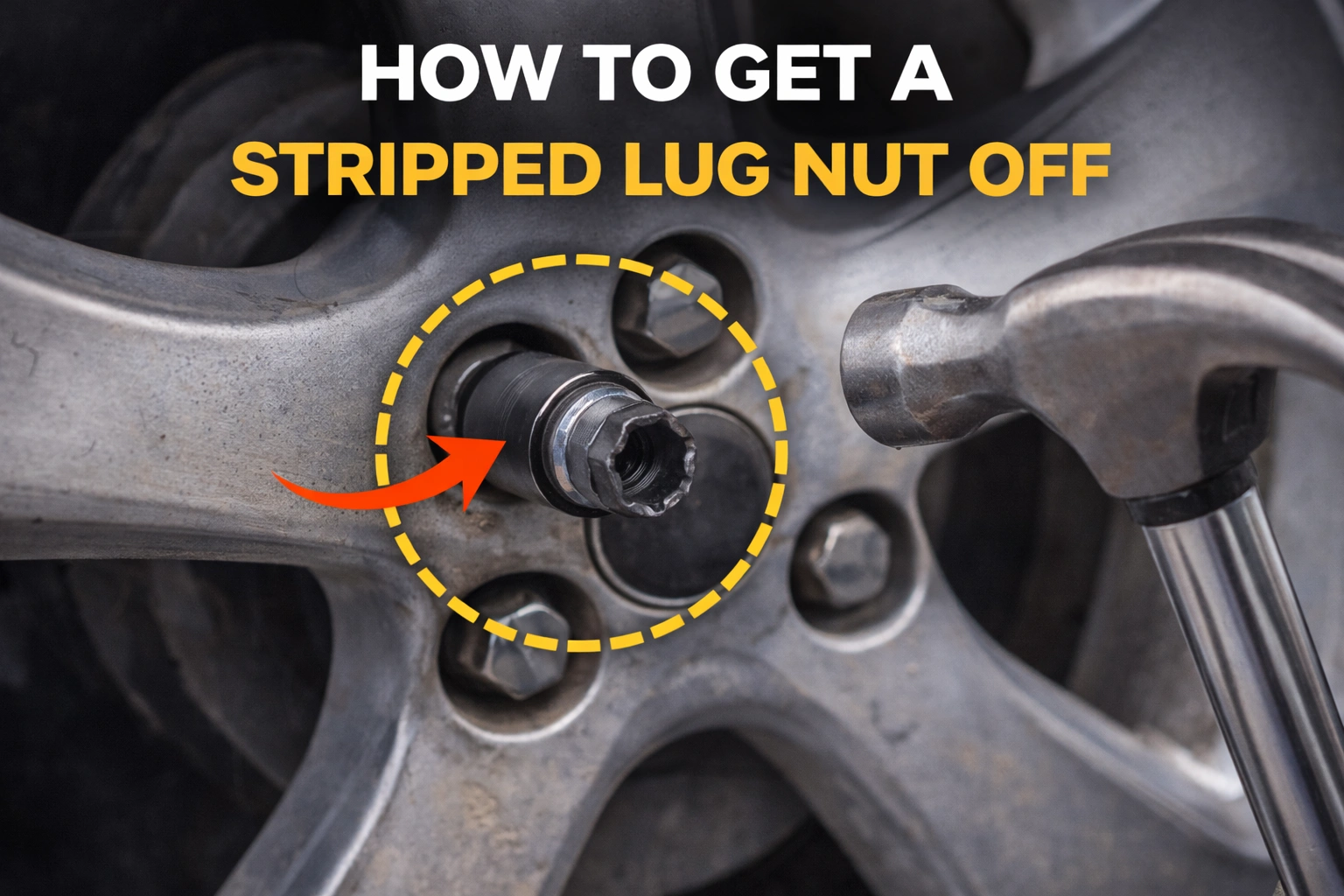
Wheel removal should be a simple task. Loosen the lug nuts, lift the vehicle, and take the wheel off. But when one lug nut becomes rounded, seized, or stripped, that routine job quickly turns into a frustrating mechanical battle. A stripped lug nut refuses to grip properly with a standard socket, leaving the wheel stuck in place and the repair stalled before it even begins.
This problem often happens after years of overtightening with impact tools, corrosion from road salt, or using the wrong size socket. Once the edges round off, traditional tools simply spin without biting into the metal. Many people respond with force, which can damage the stud, wheel, or brake components.
Removing a stripped lug nut requires patience, the right tools, and a methodical approach. Done correctly, the nut comes off without harming the wheel. Done incorrectly, it can turn into a much larger repair.
Why Lug Nuts Become Stripped And Difficult To Remove
How Overtightening And Corrosion Lead To Failure
Most stripped lug nuts start with improper torque. Impact wrenches used without torque control often tighten nuts far beyond manufacturer specifications. Over time, repeated over-tightening compresses the metal and weakens the outer edges. When removal is attempted later with a standard socket, the edges collapse instead of gripping firmly.
Corrosion also plays a major role. In areas with heavy rain, snow, or road salt exposure, moisture accumulates around lug studs and nuts. Rust forms between threads and creates resistance. As more force is applied during removal, the outer shell may round off before the threads break free.
This combination of corrosion and excessive torque turns a simple removal into a stubborn mechanical obstacle.
Incorrect Tool Use And Socket Fitment
Using the wrong size socket is one of the most common causes of stripping. A slightly loose socket may seem close enough, but under high torque it slips and rounds the nut. Twelve-point sockets are especially prone to slipping compared to six-point sockets, which provide better contact.
In some cases, decorative chrome caps on lug nuts deform independently of the actual nut beneath. These caps spin freely, creating the illusion of a stripped nut when the inner core remains intact.
Recognizing whether the outer shell is damaged or the entire nut is compromised determines the appropriate removal strategy.
Essential Tools And Preparation Before Attempting Removal
Creating A Stable And Safe Work Environment
Before addressing a stripped lug nut, the vehicle must be positioned safely. Park on level ground and engage the parking brake. Use wheel chocks to prevent movement. If lifting the vehicle, ensure it is supported securely with jack stands rather than relying solely on a hydraulic jack.
Applying excessive force to remove a stubborn nut can shift the vehicle slightly. Stability reduces the risk of injury and prevents additional damage to suspension components or brake assemblies.
Safety glasses and gloves provide protection against flying metal fragments or sudden tool slips.
Choosing The Right Extraction Tools
Specialized lug nut extraction sockets are often the most effective solution. These sockets feature reverse spiral flutes that bite into the rounded surface as torque is applied. The harder the force, the tighter the grip becomes.
A breaker bar provides greater leverage than a standard ratchet. Its longer handle allows controlled application of force without sudden jerks.
Penetrating lubricant should be applied generously around the base of the lug nut and allowed time to soak. This reduces thread resistance and increases the chance of clean removal.
Proven Methods For Removing A Stripped Lug Nut
Using A Lug Nut Extractor Socket For Maximum Grip
Extractor sockets are specifically designed for this problem. After selecting the correct size, position the socket firmly over the stripped nut. A light hammer tap helps seat it securely onto the damaged surface.
Attach a breaker bar and apply steady pressure rather than quick jerking motions. Gradual force allows the extractor’s internal teeth to dig into the metal. Once the nut begins to rotate, maintain consistent motion until it loosens completely.
This method preserves the wheel and often avoids damage to the lug stud.
Hammering On A Smaller Socket For Emergency Situations
When extractor sockets are unavailable, hammering a slightly smaller six-point socket onto the nut can create a temporary grip. The smaller diameter forces the socket to bite into the rounded edges.
Once seated, use a breaker bar carefully. This approach carries some risk of socket damage but may succeed when other options are limited.
This method works best when rounding is moderate rather than completely smooth.
Applying Heat To Break Rust Bonds
In severe corrosion cases, controlled heat can expand the metal and break rust bonds between threads. A propane torch applied to the nut for a short duration increases expansion.
After heating, allow slight cooling before attempting removal. The expansion and contraction process weakens corrosion grip.
Extreme caution is required when using heat near brake components, rubber parts, or painted surfaces.
Cutting Or Splitting The Lug Nut As A Last Resort
When all other methods fail, cutting tools may be necessary. A rotary tool with a metal cutting wheel can slice into one side of the nut. Once weakened, a chisel can split it apart.
This process risks minor wheel damage and often requires replacing the lug stud.
Cutting remains the final solution when extraction tools cannot gain traction.
After Removal: Inspecting And Repairing Damage
Checking The Lug Stud Threads
Once the stripped nut is removed, inspect the stud carefully. Damaged threads compromise clamping force and wheel safety.
If threads appear flattened or severely worn, replacing the stud is recommended. Replacement typically involves removing the brake rotor and pressing out the old stud.
Leaving a compromised stud in place may lead to improper wheel torque and potential loosening.
Replacing Damaged Lug Nuts With Quality Components
All lug nuts should match in design and torque rating. Replacing only the stripped nut may create uneven wear patterns if others are weakened.
Using high-quality steel lug nuts with protective coating helps resist future corrosion.
Applying a small amount of anti-seize compound on threads in rust-prone climates may assist future removal, but care must be taken to follow torque specifications accurately.
Preventing Future Stripped Lug Nuts
Proper Torque Application Matters More Than Force
Using a torque wrench ensures lug nuts are tightened according to manufacturer recommendations. Over-tightening weakens metal and increases removal difficulty later.
Tighten in a star pattern to distribute pressure evenly across the wheel. Uneven tightening creates stress points that accelerate wear.
Avoid relying solely on impact wrenches for final torque application.
Routine Maintenance And Corrosion Protection
Periodic wheel removal and cleaning prevent rust buildup. Applying protective coatings to exposed studs reduces corrosion.
Inspecting lug nuts for signs of wear or swelling before they fail avoids emergency repairs on the roadside.
Proactive maintenance saves time and prevents costly wheel or stud replacement.
Cost Considerations And Professional Help
Removing a stripped lug nut at home may cost little beyond the price of extraction sockets. Professional shops typically charge modest labor fees for removal unless extensive damage requires stud replacement.
Replacing a single stud is generally affordable, but multiple damaged studs increase labor time. Severe wheel damage may lead to higher costs if replacement becomes necessary.
Seeking professional assistance becomes advisable when extraction tools fail or when safety concerns arise.
Final Perspective
Removing a stripped lug nut requires patience, correct tools, and careful technique. Extractor sockets remain the most reliable solution, while hammering smaller sockets or applying heat offer alternatives when needed. Cutting methods should remain the final option due to risk of damage.
Once removed, inspecting studs and replacing weakened hardware prevents repeat problems. Proper torque application and regular maintenance dramatically reduce the likelihood of future stripping.
With the right approach, even a severely rounded lug nut can be removed safely, restoring full access to the wheel and preventing further mechanical complications.