Engine oil is one of the most critical fluids inside any vehicle. It lubricates moving components, reduces friction, removes heat, and helps protect internal metal surfaces from wear.
When oil circulates through the engine, it creates a thin protective layer between parts such as pistons, bearings, and camshafts. This lubrication allows thousands of moving components to operate smoothly at high speed.
When an engine runs without oil or with extremely low oil levels, that protective layer disappears. Metal parts begin rubbing directly against each other, producing intense heat and rapid wear. Even a short period of operation without proper lubrication can cause severe internal damage.
Many drivers become concerned after discovering their engine ran low on oil. Recognizing warning signs early can help determine whether serious damage occurred. Examining symptoms such as unusual noises, performance loss, and overheating can reveal whether the engine suffered lasting mechanical problems.
Why Engine Oil Is Essential For Internal Protection
How Oil Prevents Metal To Metal Contact
Engine components operate under enormous pressure and speed. Pistons move up and down inside cylinders thousands of times per minute, while the crankshaft and camshaft rotate continuously. Without lubrication, these components would generate friction that could quickly destroy engine surfaces.
Oil forms a thin film between moving parts, preventing direct metal contact. This film allows parts to glide smoothly while carrying away heat created during combustion. Bearings, cylinder walls, and valve components depend on this protective barrier.
Vehicles such as the Toyota Camry and Honda Accord rely on a pressurized lubrication system to deliver oil to every critical engine component.
Once oil pressure disappears, friction increases instantly. The engine begins overheating internally even if the external temperature gauge has not yet changed.
This lack of lubrication is the main reason engines suffer damage when operated without oil.
Heat Buildup And Component Stress
Oil also acts as a cooling agent inside the engine. As it circulates through internal passages, it absorbs heat from moving parts and carries it away toward cooler areas such as the oil pan.
When oil levels drop too low, cooling efficiency decreases. Friction rises rapidly as metal surfaces begin scraping against each other. This friction produces extreme heat that can warp components and damage bearings.
Vehicles like the Ford F-150 often experience severe engine damage when operated without sufficient lubrication during heavy loads.
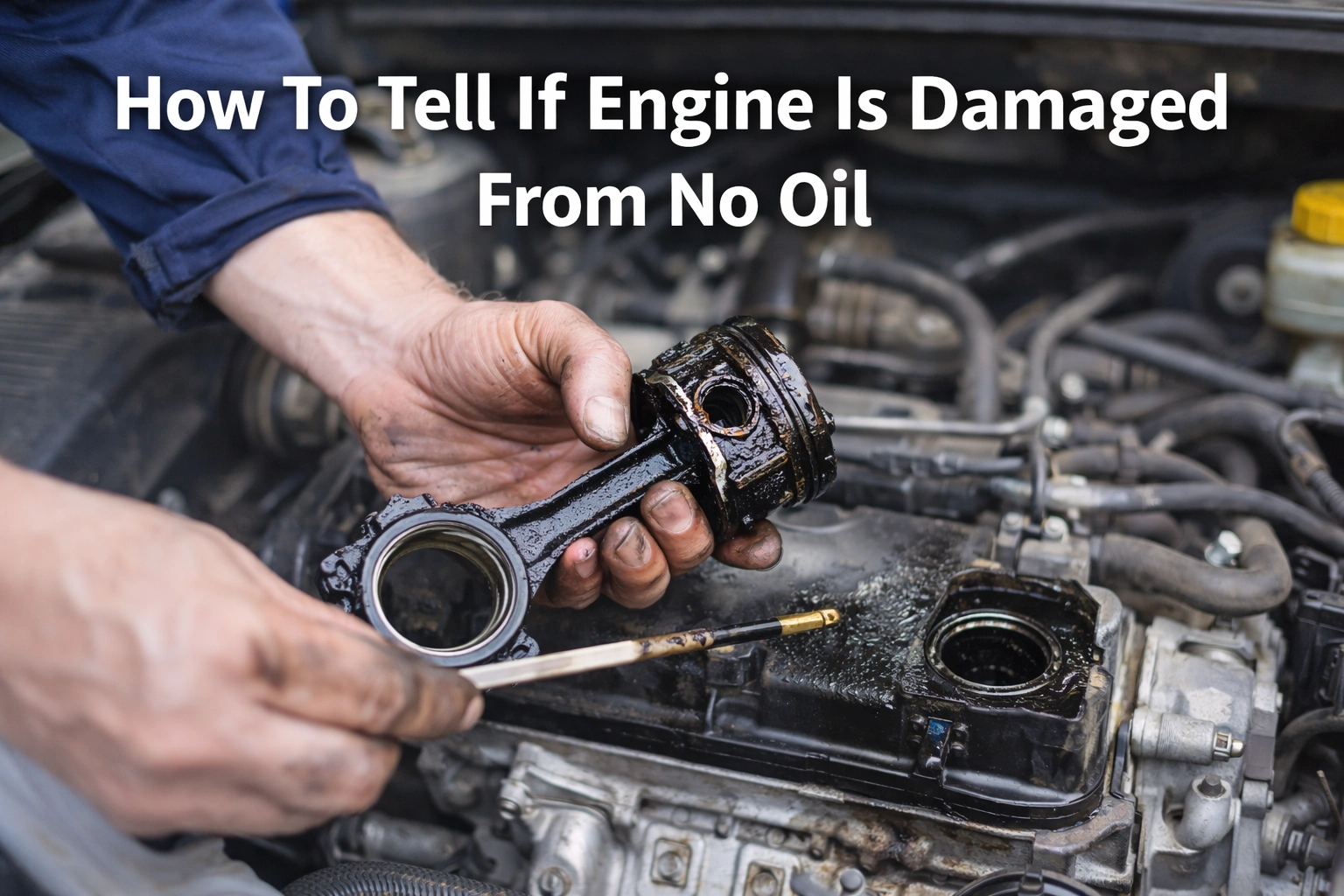
The combination of heat and friction can cause pistons to seize, bearings to fail, and internal surfaces to score deeply.
These mechanical changes often leave clear signs that the engine has suffered internal damage.
Early Warning Signs Of Engine Damage From No Oil
Knocking Or Ticking Noises From The Engine
One of the earliest signs of internal engine damage is unusual noise. When oil is absent, bearings and other moving parts begin to wear quickly. This wear creates extra clearance between components.
As a result, drivers may hear knocking, tapping, or ticking sounds from the engine. These noises often increase with engine speed or become more noticeable during acceleration.
Vehicles such as the Chevrolet Malibu sometimes develop knocking sounds when connecting rod bearings become damaged from oil starvation.
These sounds indicate that metal surfaces are striking each other due to excessive wear.
Persistent engine knocking usually signals serious internal damage that requires immediate inspection.
Sudden Loss Of Engine Power
Another common symptom of oil related engine damage is reduced power. When pistons and cylinders become scratched or worn, compression inside the engine may decrease.
Lower compression prevents the engine from generating full power during combustion. Drivers may notice slower acceleration or difficulty maintaining speed.
Vehicles such as the Nissan Altima can experience performance loss when internal engine components are damaged.
This reduction in performance often appears alongside rough engine operation or hesitation during acceleration.
Changes in power output can indicate internal wear caused by inadequate lubrication.
Visible Signs That Suggest Internal Engine Damage
Metal Shavings In Engine Oil
One of the clearest indicators of engine damage is the presence of metal particles in engine oil. When internal components wear excessively, small fragments of metal may break off and circulate through the lubrication system.
These particles may appear as shiny flakes or glitter-like debris in drained oil. Inspecting the oil filter can also reveal trapped metal fragments.
Vehicles such as the Toyota Corolla may show these particles when bearings or camshaft components begin deteriorating.
Metal contamination usually means internal surfaces have been severely worn.
Finding metal in engine oil often confirms that the engine experienced significant friction due to insufficient lubrication.
Excessive Engine Heat Or Smoke
Engines damaged by oil starvation often run hotter than normal. Without proper lubrication, friction between components produces extreme heat that the cooling system may struggle to manage.
In severe cases, drivers may notice smoke from the engine bay or exhaust. Overheated oil residues may burn inside the engine, creating visible smoke or strong burning odors.
Vehicles like the Hyundai Sonata sometimes produce smoke after severe internal overheating caused by lubrication failure.
These signs often indicate internal components have warped or seized due to excessive heat.
Immediate inspection becomes necessary to prevent further damage.
Professional Inspection Methods For Confirming Engine Damage
Compression Testing And Cylinder Inspection
Professional mechanics often perform compression tests to evaluate engine health. This test measures pressure inside each cylinder during engine cranking.
Low compression readings may indicate worn piston rings or damaged cylinder walls caused by operating without oil. Consistent compression across cylinders suggests internal components remain intact.
Technicians may also use specialized cameras inserted through spark plug holes to inspect cylinder walls directly.
Vehicles such as the Jeep Grand Cherokee may undergo this inspection after oil related engine incidents.
Compression testing helps determine whether internal wear has reached a level that affects engine operation.
Oil Pressure Testing And Bearing Inspection
Another diagnostic method involves checking oil pressure during engine operation. Low oil pressure after refilling the engine may indicate damaged bearings or blocked oil passages.
Mechanics may remove the oil pan to inspect connecting rod bearings and crankshaft surfaces directly.
Vehicles like the Subaru Outback require precise bearing clearance to maintain proper lubrication.
If bearings appear scored or worn, it confirms the engine suffered damage during oil starvation.
Inspection results help determine whether repair or engine replacement is necessary.
Running an engine without oil can cause severe mechanical damage within a short period. Signs such as knocking noises, power loss, overheating, and metal particles in the oil often indicate internal wear has occurred.
Prompt inspection helps determine the extent of damage and prevents further deterioration. Maintaining proper oil levels and performing regular oil changes remains one of the most effective ways to protect engine components and ensure long term reliability.