
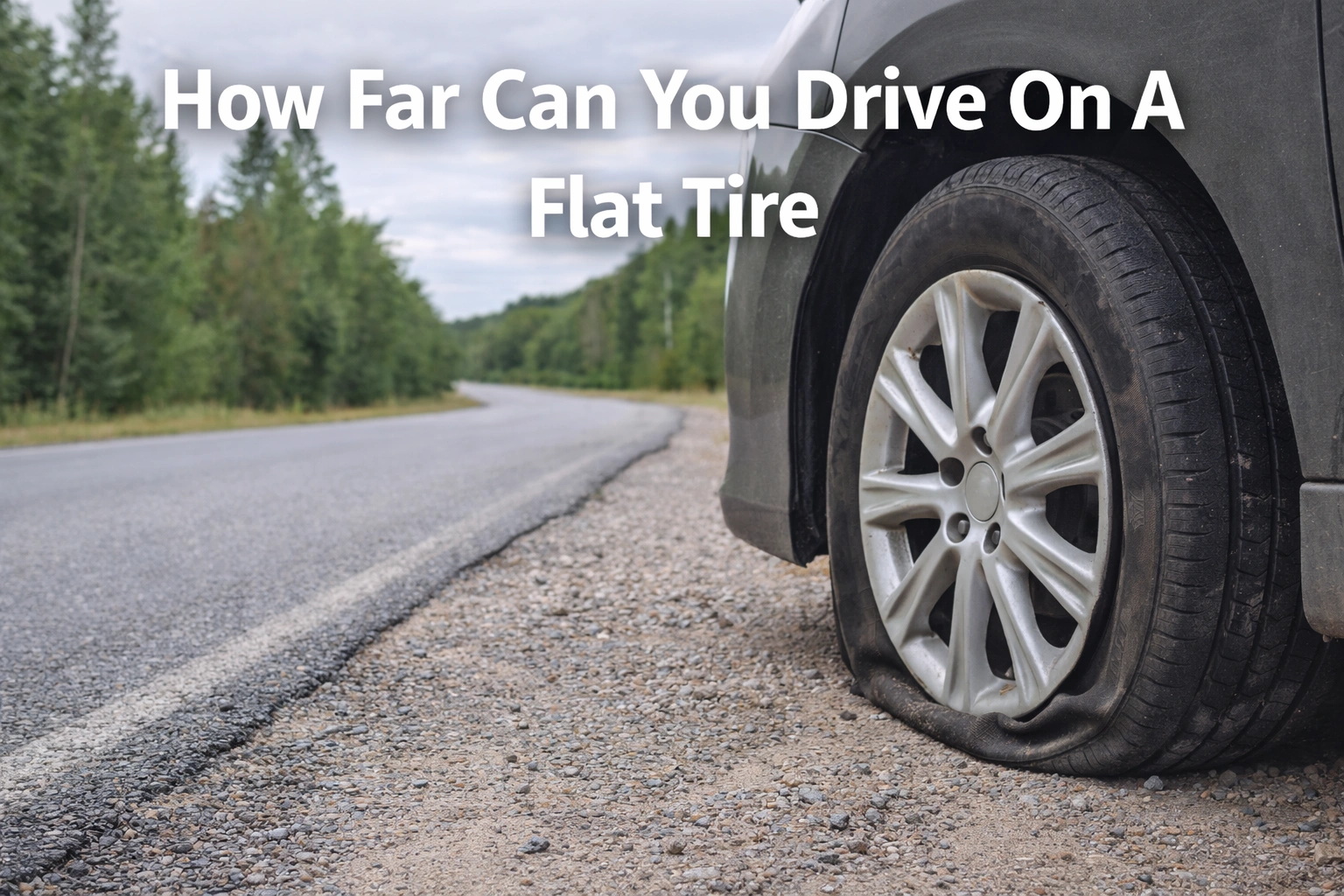
A flat tire is one of the most common and frustrating problems drivers encounter on the road. Tires are designed to support the vehicle’s weight while maintaining proper air pressure to keep their shape and strength. When air escapes completely, the tire loses its structural support. The rubber collapses under the vehicle’s weight, and the wheel rim begins pressing directly against the tire sidewall. At that moment, the tire can no longer function normally.
Many drivers wonder whether it is safe to continue driving a short distance after a tire goes flat. Sometimes a service station or repair shop is only a few blocks away, and stopping immediately may not feel practical.
However, driving on a flat tire can damage the tire itself, the wheel, and even suspension components. The distance a vehicle can travel with a flat tire depends on several factors, including tire type, speed, road conditions, and how quickly the driver reacts. A closer look at these factors helps determine what is safe and what risks may occur.
What Happens When A Tire Goes Flat
Loss Of Air Pressure And Tire Structure
A tire relies on air pressure to maintain its shape and support the weight of the vehicle. When air pressure drops to zero, the tire sidewalls collapse. Instead of rolling smoothly, the tire begins to deform under the vehicle’s weight.
As the vehicle continues moving, the sidewalls are forced to flex excessively. This bending generates heat and weakens the internal structure of the tire. The reinforced layers inside the tire begin to separate as the rubber is compressed between the road and the wheel rim.
Vehicles such as the Toyota Corolla and Honda Accord depend on correct tire pressure to maintain proper stability. Without air pressure, the tire cannot distribute weight evenly.
This rapid structural breakdown is why driving on a flat tire quickly leads to permanent damage.
Contact Between Wheel Rim And Road Surface
Once the tire collapses completely, the metal wheel rim begins to carry much of the vehicle’s weight. This creates a grinding effect between the rim and the pavement. The rim may scrape the road surface, especially during turns or bumps.
As the rim presses against the inside of the tire, it can cut through the rubber layers. This damage often destroys the tire beyond repair. Even if the tire originally had a small puncture, driving on it while flat can turn a repairable tire into one that must be replaced.
Vehicles like the Ford Escape may also suffer wheel damage when rims make contact with rough pavement.
The longer the vehicle moves in this condition, the greater the risk of permanent damage.
Distance You Can Drive On A Flat Tire
Typical Distance Before Serious Damage Occurs
Most automotive experts recommend stopping the vehicle immediately after noticing a flat tire. Continuing to drive even a short distance increases the likelihood of destroying the tire and damaging the wheel.
In many cases, a completely flat tire should not be driven more than a few hundred feet. Some drivers may travel a mile or less to reach a safe location, but even this short distance can cause irreversible damage.
Vehicles such as the Chevrolet Malibu are designed to operate with properly inflated tires. When pressure is lost, the tire structure is no longer able to support normal operation.
Even slow speeds can cause sidewall failure during extended driving.
Stopping as soon as possible helps prevent additional repair costs.
Factors That Affect Safe Distance
Several factors influence how far a vehicle can move with a flat tire. Speed is one of the most important. Higher speeds increase heat buildup and accelerate structural damage.
Road conditions also matter. Rough pavement or potholes can quickly destroy a tire that has already lost air pressure. Vehicle weight plays a role as well. Heavier vehicles place greater stress on flat tires.
For example, trucks such as the Ford F-150 carry more weight than smaller cars. A flat tire on a heavier vehicle may deteriorate more quickly.
Driving slowly for a very short distance may reduce damage, but stopping immediately remains the safest option.
Run Flat Tires And Their Limited Capability
How Run Flat Tires Work
Some vehicles are equipped with run flat tires designed to operate temporarily without air pressure. These tires contain reinforced sidewalls that support the vehicle’s weight even after losing air.
Run flat tires allow drivers to continue driving for a limited distance after a puncture. This provides enough time to reach a repair shop without changing the tire immediately.
Vehicles such as the BMW 3 Series often include run flat tires as standard equipment. The reinforced design helps maintain stability after air pressure loss.
However, even run flat tires have strict limitations regarding speed and distance.
Distance Limits For Run Flat Tires
Most run flat tires can travel approximately fifty miles after losing air pressure. The recommended speed limit is usually around fifty miles per hour to reduce heat buildup and prevent structural failure.
Exceeding these limits can cause the tire to fail completely. Even run flat tires typically require replacement after being driven without air pressure.
Vehicles such as the Mini Cooper rely on tire pressure monitoring systems to alert drivers when a run flat tire has lost air.
These systems provide a warning that the driver should proceed carefully to a repair location.
Run flat capability offers convenience but should not be considered a permanent solution.
Risks Of Driving On A Flat Tire
Driving on a flat tire can damage more than just the tire itself. The wheel rim may become bent or scratched as it contacts the road surface. A damaged rim can cause vibration and require costly replacement.
Suspension components may also experience extra stress. When the tire collapses, the vehicle’s weight shifts unevenly. This can affect alignment and strain suspension parts.
Vehicles such as the Nissan Altima rely on balanced wheel support for stable handling. A flat tire disrupts this balance and can make steering difficult.
Brake components near the wheel may also suffer damage if debris from the destroyed tire enters the wheel assembly.
Stopping quickly reduces the risk of these additional problems.
A completely flat tire should not be driven on unless absolutely necessary to reach a safe stopping point. Most tires can sustain serious damage after only a short distance without air pressure. Run flat tires offer limited mobility but still require careful speed and distance limits.
Pulling over promptly and addressing the problem prevents costly damage to tires, wheels, and suspension components. Quick action ensures the vehicle remains safe and roadworthy after a flat tire incident.