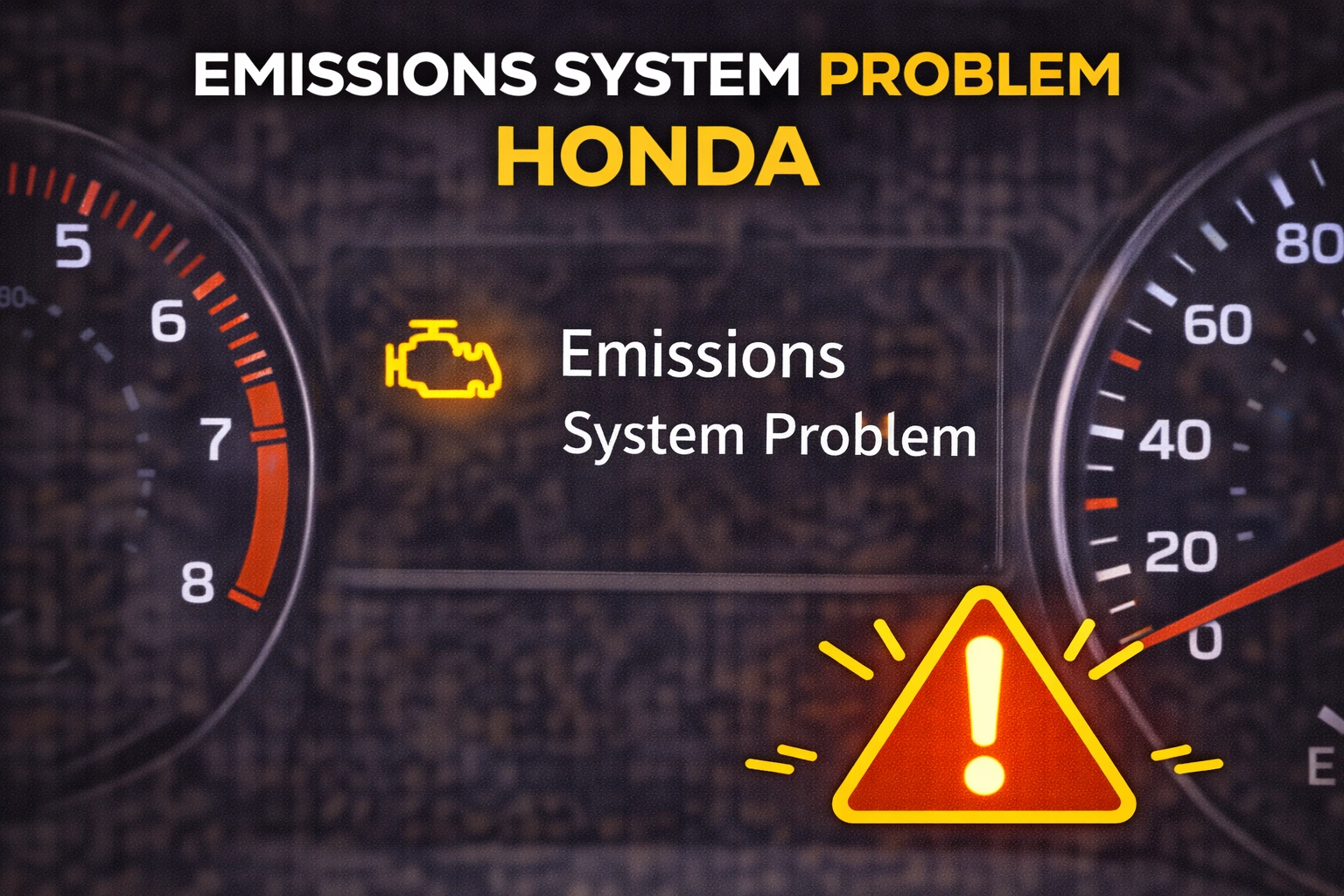
Modern Honda vehicles are known for reliability, smooth engines, and efficient fuel use. Yet even the most dependable cars can display a warning message that worries owners: “Emissions System Problem.” This alert can appear on the dashboard along with a check engine light, often without noticeable performance issues at first. For many drivers, the message feels vague and confusing.
An emissions system is not a single part. It is a network of sensors, valves, catalytic components, and electronic controls designed to reduce harmful exhaust gases. When something in that network stops working correctly, the vehicle’s computer detects irregular readings and triggers a warning.
The cause can range from something minor, like a loose fuel cap, to more complex issues involving sensors or the catalytic converter. Knowing what the system does and how it works makes it easier to respond calmly and take the right steps toward repair.
How Honda Emissions Systems Work
The Core Components Behind Emission Control
Honda designs its emission systems to meet strict environmental regulations across global markets. Vehicles such as the Honda Civic and Honda CR-V rely on multiple integrated components to reduce pollutants. These components include the catalytic converter, oxygen sensors, exhaust gas recirculation system, evaporative emission control system, and onboard diagnostics module.
The catalytic converter is the central piece. It transforms harmful gases like carbon monoxide, hydrocarbons, and nitrogen oxides into less harmful substances before they exit the exhaust. Oxygen sensors placed before and after the converter monitor exhaust composition and send data to the engine control module. This allows precise adjustment of air-fuel mixture.
The evaporative emission system prevents fuel vapors from escaping into the atmosphere. It stores vapors in a charcoal canister and releases them into the engine to be burned during normal operation. The exhaust gas recirculation system lowers combustion temperature to reduce nitrogen oxide formation. All of these systems work together continuously, monitored by electronic controls that detect any imbalance.
Why The Warning Message Appears
When the engine control module identifies readings outside normal parameters, it stores a diagnostic trouble code. If the issue affects emissions significantly, the dashboard displays an emissions warning. Sometimes it appears alongside the check engine light; in other cases, it shows as a separate message in the information display.
The trigger does not always mean a major failure. It simply means the system detected something abnormal. A loose gas cap, for example, can cause pressure changes in the fuel system that mimic a leak. Faulty sensors can also send incorrect data, even when the mechanical parts are functioning properly.
Because Honda vehicles use sensitive monitoring systems, even minor irregularities can trigger alerts. That sensitivity helps maintain compliance with emission laws but can also cause confusion when symptoms are not immediately obvious.
Common Causes Of Emissions System Problems In Honda
Faulty Oxygen Sensors And Air Fuel Imbalance
Oxygen sensors play a critical role in maintaining correct air-fuel ratios. Over time, they can degrade due to heat exposure and contamination. When a sensor sends inaccurate data, the engine may run too rich or too lean. This imbalance increases emissions and can reduce fuel efficiency.
A failing oxygen sensor often triggers a check engine light along with the emissions message. Drivers may notice slightly rough idling or reduced fuel mileage. In most cases, replacing the faulty sensor resolves the issue quickly. Honda engines are designed for efficiency, so even small sensor inaccuracies can prompt warnings.
Using high-quality fuel and maintaining regular service intervals helps prolong sensor life. However, wear is inevitable after many miles. Fortunately, sensor replacement is usually straightforward and far less expensive than catalytic converter replacement.
Catalytic Converter Performance Issues
The catalytic converter can deteriorate over time due to contamination, overheating, or internal damage. If the converter loses efficiency, downstream oxygen sensors detect abnormal exhaust readings and alert the system.
Common causes of converter damage include prolonged misfires, oil consumption, or fuel system problems. Unburned fuel entering the exhaust can overheat and damage the converter’s internal substrate. In some Honda models, extended driving with ignition issues can accelerate this wear.
Replacement can be costly because converters contain precious metals and must meet strict environmental standards. Before replacing one, technicians typically confirm the diagnosis through scan tools and performance testing to avoid unnecessary expense.
Evaporative Emission System Leaks
The evaporative emission system prevents fuel vapors from escaping. A loose or damaged gas cap is one of the most frequent triggers for emissions warnings. If the system cannot maintain proper pressure, it detects a leak.
Other causes include cracked hoses, faulty purge valves, or charcoal canister issues. These components may degrade due to age or environmental exposure. While such issues rarely affect drivability, they require attention to maintain proper emissions compliance.
In many cases, tightening or replacing the fuel cap clears the warning after a few drive cycles. If the message remains, further inspection may be necessary.
Symptoms And Diagnostic Approach
Recognizing Early Signs Beyond The Warning Light
An emissions system problem may not always produce noticeable symptoms. Some vehicles continue operating normally while the warning remains active. However, certain signs can indicate deeper issues.
Rough idle, hesitation during acceleration, decreased fuel efficiency, or unusual exhaust smells may accompany emission faults. In some cases, drivers notice reduced power, especially if the issue affects air-fuel mixture or exhaust flow.
If the check engine light flashes rather than staying steady, that signals a more serious problem such as an engine misfire. Flashing lights require immediate attention to prevent catalytic converter damage.
Monitoring performance changes and noting when the warning appears can help technicians diagnose the issue efficiently.
How Technicians Identify The Root Cause
Professional diagnosis begins with connecting an OBD-II scan tool to retrieve stored trouble codes. These codes provide direction but not always a final answer. For example, a code indicating catalyst efficiency below threshold could mean a failing converter or faulty sensor.
Technicians often inspect vacuum lines, fuel cap seals, wiring connections, and sensor readings in real time. Smoke testing may be used to detect evaporative leaks. Fuel trim data helps evaluate air-fuel mixture accuracy.
Honda vehicles use advanced onboard diagnostics, making systematic testing essential. Guesswork can lead to unnecessary part replacement. A thorough inspection ensures accurate repair and avoids repeated warning messages.
Repair Costs And Long Term Maintenance
Typical Repair Expenses And What To Expect
Repair costs vary widely depending on the underlying cause. Replacing a fuel cap may cost very little. Oxygen sensor replacement is generally moderate in price. Catalytic converter replacement, however, can be expensive due to precious metal content and labor.
Labor rates differ by region and service provider. Using genuine parts often ensures compatibility and durability. Aftermarket components may cost less but should meet regulatory standards.
Delaying repairs can increase overall cost. For example, driving with a misfire can damage the catalytic converter, leading to more extensive repairs later. Addressing warnings early often prevents larger expenses.
Preventive Measures To Avoid Future Problems
Routine maintenance plays a key role in emission system health. Regular oil changes prevent contamination buildup. Timely spark plug replacement reduces misfire risk. Keeping the fuel system clean supports efficient combustion.
Avoiding prolonged driving with warning lights active reduces strain on exhaust components. Using quality fuel and ensuring proper engine tune-up help maintain optimal air-fuel balance.
Periodic inspection of hoses and connections can catch small leaks before they trigger alerts. Staying proactive protects both engine performance and environmental compliance.
Bottom Line
An emissions system problem in a Honda can stem from minor issues or more complex component failures. The warning serves as an early alert that something within the emission control network requires attention. While the message may feel concerning, many causes are manageable and relatively affordable to fix.
Prompt diagnosis, proper repair, and consistent maintenance keep Honda vehicles operating efficiently and within environmental standards. Modern emission systems are sophisticated, but they are also designed for durability. With attentive care and timely service, most emission warnings can be resolved without long-term complications.