Modern vehicles communicate constantly with their drivers. From fuel warnings to tire pressure alerts, dashboard lights are designed to provide quick insight into how a vehicle is operating. One of the most common indicators drivers notice is “TC” or a traction control symbol. While it may seem like just another light among many, it represents an important safety feature built into nearly every modern vehicle.
TC stands for Traction Control. This system helps prevent wheel slip during acceleration, especially on slippery or uneven surfaces. Whether driving in rain, snow, gravel, or even during hard acceleration on dry pavement, traction control plays a role in maintaining stability. When the TC light appears, it can signal normal operation, temporary deactivation, or a system fault. To respond properly, it is important to know what the system does, how it works, and what different warning scenarios mean for everyday driving.
What Traction Control Does And Why It Matters
The Purpose Of Traction Control In Modern Vehicles
Traction control is designed to prevent excessive wheel spin. When a vehicle accelerates, power is delivered to the wheels through the drivetrain. If road conditions reduce grip, the driven wheels may spin faster than the vehicle is actually moving. This loss of traction reduces control and can cause instability.
The traction control system monitors wheel speed sensors located at each wheel. If one wheel rotates significantly faster than others, the system detects slip. It then reduces engine power or applies braking force to the slipping wheel. This restores grip and keeps the vehicle stable.
Traction control works closely with anti-lock braking systems and electronic stability control. Together, these systems create a safety network that improves handling in low-traction conditions. Vehicles such as the Toyota Corolla and Honda Accord include traction control as standard equipment because of its proven safety benefits.
This feature does not replace careful driving, but it adds an extra layer of protection during unexpected road changes.
How The TC Light Functions On The Dashboard
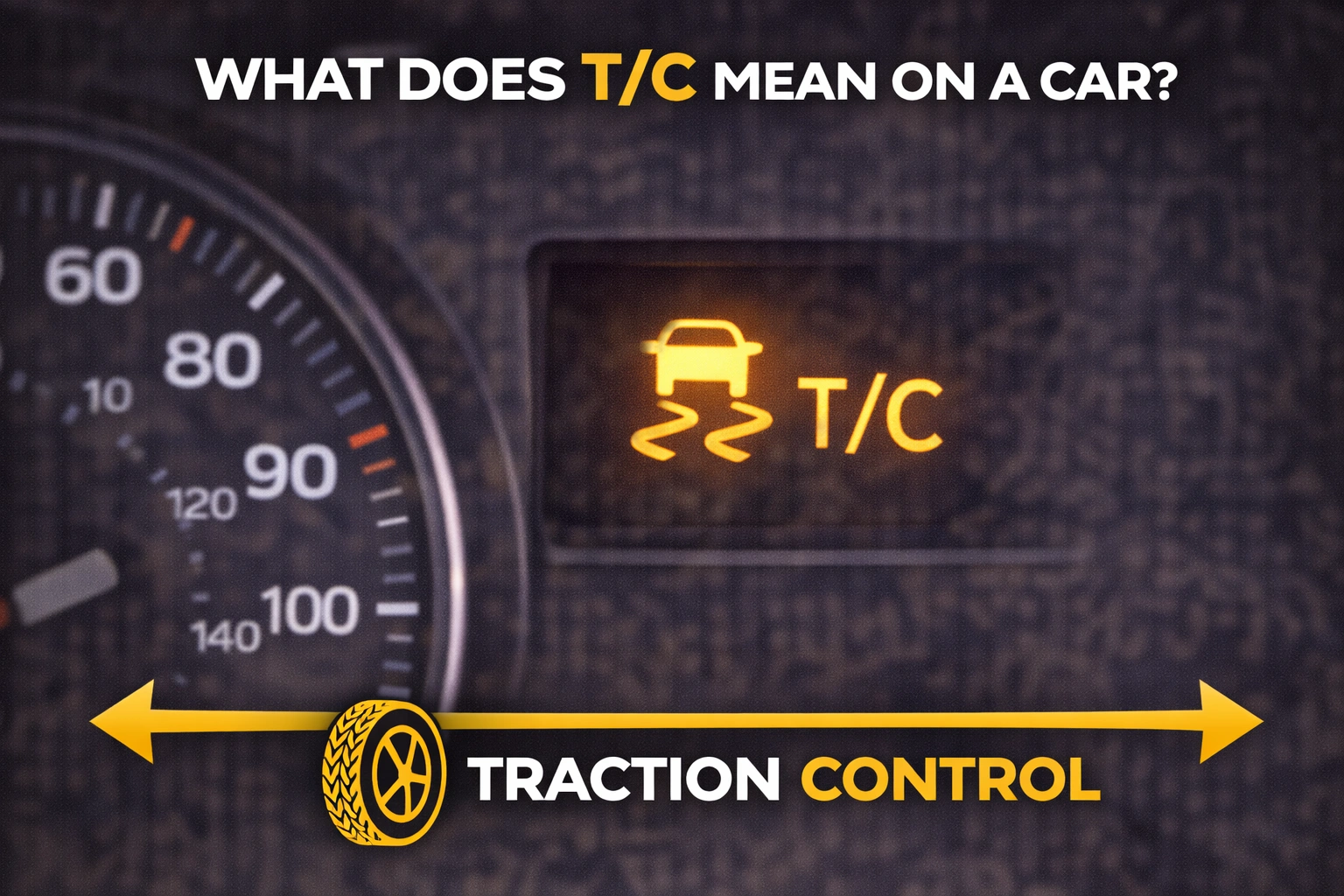
The TC light typically appears as the letters “TC” or as an icon of a car with wavy skid lines beneath it. When the system actively intervenes, the light may flash briefly. This flashing indicates the system is working to correct wheel slip.
If the light remains solid, it often signals that traction control has been manually turned off or that a malfunction has been detected. Many vehicles include a button labeled “TC” or “TCS Off” that allows drivers to disable the system temporarily.
A solid light combined with other warning indicators may suggest a sensor issue or related stability control fault. In that case, diagnostic testing is necessary to identify the root cause.
Why The TC Light Comes On
Normal Activation During Slippery Conditions
A flashing TC light during acceleration on wet or icy roads usually indicates proper system operation. When wheels begin to spin, the system engages quickly. The brief flash shows it is correcting traction loss.
Drivers may feel a slight reduction in engine power or hear a subtle braking sound. This response happens in fractions of a second. Once traction is restored, the light turns off automatically.
This behavior is especially common in winter climates or during heavy rain. The system ensures smoother acceleration and reduces the risk of losing control when road surfaces offer limited grip.
Understanding that a flashing light represents active assistance helps avoid unnecessary concern.
System Fault Or Sensor Malfunction
If the TC light stays illuminated continuously, a problem may exist. Wheel speed sensors are common failure points because they are exposed to dirt, moisture, and road debris. A damaged sensor may send inaccurate data to the vehicle’s control module.
Other potential causes include issues with the anti-lock braking system, steering angle sensor faults, or wiring problems. Since traction control relies on data from multiple systems, a malfunction in one component can disable the entire feature.
When the light remains on, the vehicle typically operates normally but without traction assistance. Prompt diagnosis prevents further complications and restores full functionality.
Can You Drive With The TC Light On?
Safety Considerations When The System Is Disabled
Driving with the TC light illuminated depends on the cause. If the system has been manually turned off, normal driving can continue. However, reduced traction support may increase the risk of wheel spin in slippery conditions.
If a fault triggers the warning, the vehicle may disable both traction control and stability control systems. While basic braking and steering remain functional, advanced safety support may not be available.
In dry conditions, the absence of traction control may not feel noticeable. On wet or icy surfaces, the difference becomes more significant. Extra caution is necessary until repairs are completed.
Ignoring persistent warnings can allow minor sensor issues to develop into larger system faults.
Situations Where Turning TC Off Is Helpful
There are certain situations where temporarily disabling traction control is beneficial. Deep snow, mud, or sand sometimes require controlled wheel spin to maintain forward movement. In these cases, traction control may limit power too aggressively.
Turning off the system allows the wheels to spin slightly, helping clear debris and gain traction. Once the vehicle returns to stable pavement, reactivating traction control is recommended.
Performance-oriented vehicles may also allow partial deactivation for controlled driving on closed tracks. However, public road use should prioritize safety features.
How Traction Control Works With Other Systems
Connection Between TC And Stability Control
Traction control is closely related to electronic stability control. While traction control manages wheel spin during acceleration, stability control helps maintain directional balance during cornering or sudden maneuvers.
Both systems use similar sensors, including wheel speed, steering angle, and yaw rate sensors. If one system experiences a malfunction, the other may also deactivate.
In many vehicles, a combined warning light indicates shared system faults. This interconnected design improves overall vehicle stability but requires accurate sensor data to function properly.
Modern safety engineering integrates these systems seamlessly to protect drivers in unexpected scenarios.
Integration With Anti Lock Braking Systems
Anti-lock braking systems prevent wheel lock during hard braking. Traction control uses the same wheel speed sensors to detect slip during acceleration.
When traction control applies braking force to a spinning wheel, it uses the same hydraulic components responsible for anti-lock braking. This shared hardware reduces system complexity and improves efficiency.
Because of this integration, a malfunction in the anti-lock braking system can also trigger a TC warning. Addressing brake system faults often restores traction functionality as well.
Routine brake maintenance and sensor inspection contribute to long-term reliability.
Maintaining Traction Control Performance
Regular vehicle maintenance helps keep traction systems working correctly. Cleaning wheel speed sensors during brake service reduces contamination buildup. Inspecting wiring and connectors prevents electrical issues.
Replacing worn tires is also critical. Uneven tire wear or mismatched tire sizes can confuse wheel speed readings, leading to false warnings.
Battery health plays a role as well. Weak batteries can trigger electronic system faults, including traction alerts. Ensuring stable voltage supply protects sensitive control modules.
When warning lights appear, diagnostic scanning identifies precise trouble codes. Accurate repair restores full system capability and maintains vehicle safety.
Traction control is more than just a dashboard light. It represents an advanced safety feature designed to maintain grip and stability in changing road conditions. Whether the TC light flashes during operation or remains on due to a fault, addressing it properly ensures the vehicle performs as intended.
By recognizing how the system functions and responding promptly to warnings, drivers maintain safer control and protect essential components. Modern vehicles rely on coordinated electronic systems, and traction control plays a key role in that protective network.