Modern vehicles rely on electronic safety systems that help maintain control during acceleration and slippery road conditions. One of the most important of these systems is traction control.
It monitors wheel movement and automatically adjusts engine power or braking when a tire begins to spin faster than the others. By controlling wheel slip, the system helps the vehicle maintain stability on wet roads, snow, or loose surfaces.
Sometimes drivers notice the traction control warning light illuminated on the dashboard. This light may appear briefly during normal operation when the system activates, but it can also remain on continuously if the system detects a problem. In other cases, the light may stay on after a repair or battery replacement.
Resetting the traction control light can sometimes resolve the issue, although persistent warnings often require further inspection. Knowing how the system works and what steps may reset the warning indicator helps drivers determine whether the problem is minor or something that requires professional attention.
How Traction Control Systems Work In Modern Vehicles
Sensors That Monitor Wheel Movement
Traction control systems rely on several electronic sensors placed around the vehicle. Wheel speed sensors located near each wheel constantly monitor how fast the wheels are rotating. These sensors send information to the vehicle’s control module, which compares the speed of each wheel.
When one wheel spins faster than the others, the system recognizes that traction has been lost. The control module quickly reacts by reducing engine power or applying brake pressure to the slipping wheel. This restores balance and helps maintain control.
Vehicles such as the Toyota Camry and Honda CR-V rely heavily on wheel speed sensors for traction control operation.
Because these sensors are connected to other systems like anti lock brakes, a fault in one component may trigger a warning light for multiple systems.
Interaction With Other Stability Systems
Traction control rarely works alone. It usually functions as part of a larger stability system that includes anti lock braking and electronic stability control. These systems communicate with each other through the vehicle’s central control module.
Electronic stability control monitors steering angle, vehicle speed, and lateral movement. When the system detects instability, it may activate traction control or braking adjustments to help stabilize the vehicle.
Vehicles such as the Ford Escape integrate these technologies to provide better handling during difficult road conditions.
Because these systems share sensors and control units, a warning light may appear even when the issue originates in another related component.
Resetting the traction control light often involves addressing these interconnected systems.
Common Reasons The Traction Control Light Appears
Temporary Activation During Slippery Conditions
The traction control light may flash briefly during normal operation. This typically happens when the system actively reduces wheel spin. For example, accelerating on a wet road or snowy surface can cause the system to intervene momentarily.
When the system activates, the dashboard light flashes to inform the driver that traction control is working. Once normal traction returns, the light turns off automatically.
Vehicles like the Subaru Outback often activate traction control when driving on gravel or icy roads.
A flashing light during these conditions is normal and does not indicate a malfunction.
However, a steady light that remains on after driving may indicate a system fault.
Faulty Sensors Or Electrical Issues
A traction control warning light may remain on when sensors or electrical components fail. Wheel speed sensors are particularly sensitive to dirt, debris, and damage.
If a sensor stops sending accurate data, the control module may disable traction control to prevent incorrect system responses. Wiring issues, loose connectors, or blown fuses may also trigger the warning indicator.
Vehicles such as the Nissan Altima rely on precise sensor signals for traction control and anti lock braking.
Any interruption in communication between sensors and the control module may cause the dashboard warning light to remain illuminated.
Methods For Resetting The Traction Control Light
Restarting The Vehicle And Checking The System
One of the simplest ways to reset the traction control light is by restarting the vehicle. Occasionally the warning light appears due to a temporary electronic glitch. Turning the engine off and restarting it allows the control modules to reset.
When the vehicle starts again, the system performs a self check. If the issue was temporary, the warning light may disappear.
Vehicles such as the Hyundai Sonata perform diagnostic checks each time the engine is started.
Restarting the vehicle does not fix mechanical issues, but it can clear minor electronic faults that caused the warning indicator.
Drivers should observe whether the light returns after driving.
Using The Traction Control Button
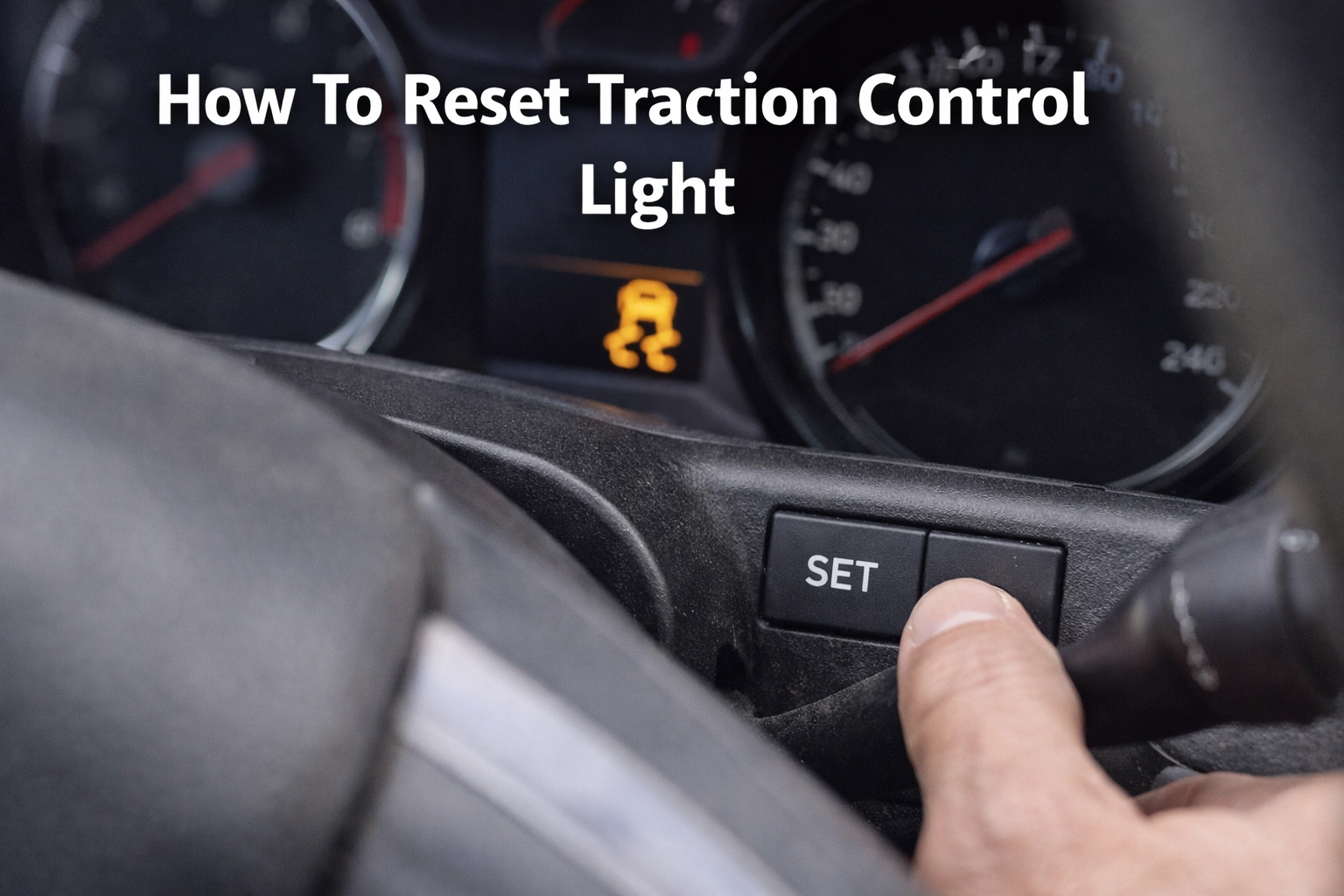
Many vehicles include a traction control button located on the dashboard or center console. This button allows drivers to disable the system temporarily when necessary, such as when trying to move a vehicle stuck in deep snow or mud.
Pressing the button may turn the traction control light on to indicate the system has been disabled. Pressing the button again typically reactivates the system.
Vehicles like the Jeep Grand Cherokee often include this feature for off road driving situations.
Turning the system off and then back on may reset the warning light if it was triggered by an accidental button press.
Checking the owner’s manual helps identify the exact location of this control.
Disconnecting And Reconnecting The Battery
Another method sometimes used to reset dashboard warning lights involves disconnecting the vehicle battery for a short period. Disconnecting the battery resets many electronic control modules.
After reconnecting the battery, the vehicle performs system checks again during startup. If the underlying problem has been resolved, the traction control light may no longer appear.
Vehicles such as the Chevrolet Malibu may require a short drive cycle after reconnecting the battery for systems to recalibrate.
This approach should be used carefully, as disconnecting the battery may reset other vehicle settings as well.
Persistent warning lights after this procedure often indicate a deeper mechanical issue.
When Professional Diagnosis Is Necessary
Sometimes resetting the traction control light does not resolve the problem. If the warning indicator remains illuminated, professional inspection may be required.
Technicians typically connect a diagnostic scanner to the vehicle’s onboard computer system. This tool reads error codes stored in the control module and identifies which component triggered the warning.
Vehicles such as the BMW 3 Series often rely on advanced electronic systems that require specialized diagnostic tools.
Common repairs may involve replacing a faulty wheel speed sensor, repairing wiring, or recalibrating the stability control module.
Addressing the root cause ensures the traction control system functions correctly and continues protecting vehicle stability.
The traction control system plays an important role in maintaining stability and preventing wheel slip during acceleration. When the warning light appears, simple steps such as restarting the vehicle, checking the traction control button, or resetting electronic systems may clear the indicator.
However, persistent warnings often point to sensor issues or electrical faults that require professional inspection. Maintaining traction control components ensures the system operates properly and continues supporting safe vehicle handling in challenging road conditions.