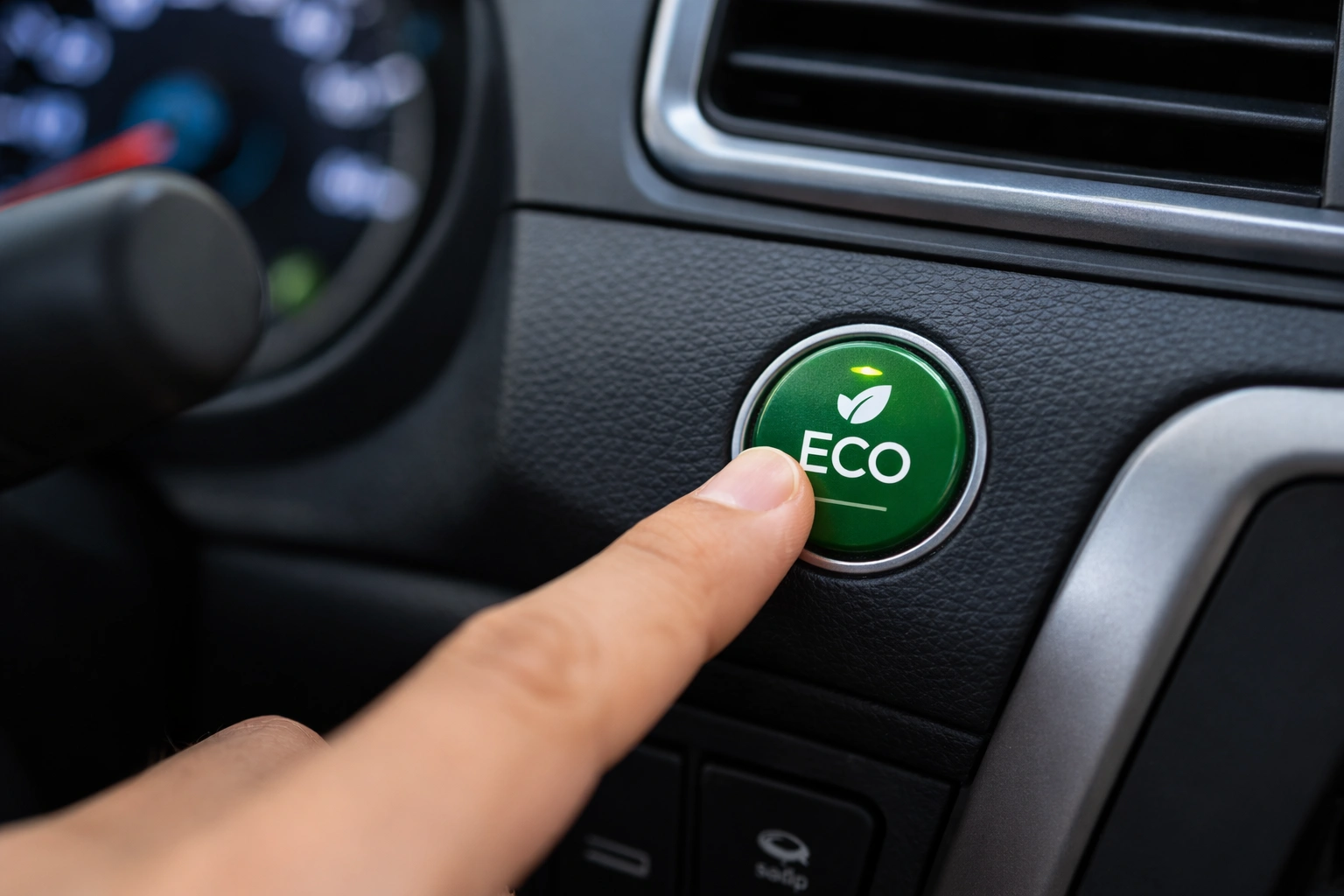
Modern vehicles include a variety of intelligent systems designed to improve efficiency and reduce fuel consumption. One feature that many drivers notice on the dashboard is the ECO indicator or ECO mode.
This small symbol may appear while driving or as a selectable driving mode in the vehicle settings. Although it seems simple, the ECO feature represents a collection of technologies working together to help the engine operate more efficiently.
Automakers developed ECO systems to reduce fuel usage, limit unnecessary engine strain, and improve overall efficiency during everyday driving. The system adjusts several aspects of vehicle behavior, including throttle response, transmission shift timing, and sometimes climate control performance.
Instead of delivering maximum power instantly, ECO mode prioritizes smooth acceleration and steady engine operation.
Many drivers wonder whether this feature truly saves fuel or simply changes how the car feels. Learning how ECO systems work provides a clearer picture of their purpose and the benefits they offer during regular driving conditions.
Meaning And Purpose Of ECO Mode In Vehicles
What ECO Mode Represents In Modern Cars
ECO mode stands for economy mode. It is a driving setting designed to improve fuel efficiency by optimizing how the engine and transmission operate. When ECO mode is active, the vehicle’s control system adjusts performance characteristics to reduce fuel consumption.
Instead of allowing rapid throttle response, the system moderates engine output so acceleration becomes smoother and more gradual. The transmission may also shift into higher gears earlier, allowing the engine to run at lower revolutions per minute.
Vehicles such as the Toyota Prius and Honda Civic include ECO indicators that illuminate when the car is operating efficiently.
This feature encourages gentle acceleration and steady speeds, which naturally improve fuel economy.
The goal is not to reduce performance entirely but to manage power delivery in a way that conserves fuel during normal driving situations.
Why Automakers Introduced ECO Technology
Automobile manufacturers introduced ECO mode to meet growing demands for fuel efficiency and reduced emissions. As environmental regulations became stricter, automakers began designing systems that help engines operate more efficiently without sacrificing reliability.
ECO mode allows vehicles to automatically adjust engine behavior depending on driving conditions. Instead of requiring drivers to change habits dramatically, the system assists by limiting aggressive acceleration and optimizing gear selection.
Vehicles such as the Hyundai Elantra and Nissan Altima include ECO driving modes as standard features.
These systems contribute to improved fuel efficiency while also reducing carbon emissions.
ECO technology has become common in both gasoline powered and hybrid vehicles as part of modern efficiency strategies.
How ECO Mode Changes Vehicle Performance
Throttle Response And Acceleration Control
One of the most noticeable effects of ECO mode is the change in throttle response. In normal driving modes, pressing the accelerator pedal sends a signal to the engine control module that increases fuel delivery and power output quickly.
When ECO mode is active, the system softens this response. The engine increases power more gradually even when the accelerator pedal is pressed firmly. This change prevents sudden bursts of fuel consumption.
Vehicles such as the Toyota Camry use electronic throttle control systems to regulate acceleration smoothly when ECO mode is enabled.
The result is slower but more controlled acceleration, which helps conserve fuel during city traffic or steady highway cruising.
Drivers may initially notice reduced responsiveness, but this adjustment encourages smoother operation and improved efficiency.
Transmission Behavior And Gear Shifts
ECO mode also affects how the transmission shifts between gears. Automatic transmissions normally select gears based on engine speed, throttle position, and vehicle load.
When ECO mode is active, the transmission often shifts to higher gears earlier than usual. Lower engine speed reduces fuel consumption because the engine operates with less resistance.
Vehicles such as the Subaru Forester use this strategy to maintain efficient engine operation during steady cruising.
Earlier upshifts help the engine run at lower revolutions while maintaining consistent vehicle speed.
This approach reduces fuel usage while still allowing adequate performance for everyday driving needs.
Additional Systems Influenced By ECO Mode
Climate Control Adjustments
Some vehicles modify climate control operation when ECO mode is enabled. Air conditioning systems require engine power to operate the compressor, which increases fuel consumption.
To improve efficiency, ECO mode may limit compressor activity or adjust fan speeds slightly. This reduces the load placed on the engine while maintaining comfortable cabin temperatures.
Vehicles such as the Kia Sportage often integrate climate system adjustments within ECO mode settings.
These changes are usually subtle and designed so passengers still experience a comfortable environment.
Reducing energy demand from auxiliary systems allows the engine to operate more efficiently.
Hybrid System Optimization
Hybrid vehicles often incorporate more advanced ECO systems that coordinate gasoline engines with electric motors. In these vehicles, ECO mode may encourage greater reliance on electric power when possible.
The system may delay engine activation or increase regenerative braking efficiency to capture more energy during deceleration.
Vehicles like the Toyota RAV4 Hybrid rely heavily on this coordination between electric motors and internal combustion engines.
By prioritizing electric operation during low speed driving, hybrid systems can significantly improve efficiency.
These adjustments help maximize the benefits of hybrid technology.
When ECO Mode Works Best
ECO mode delivers the greatest benefits during steady and moderate driving conditions. City traffic, commuting, and highway cruising often provide ideal situations for efficiency focused operation.
Maintaining smooth acceleration and consistent speeds allows the system to optimize engine performance effectively. Drivers who frequently accelerate aggressively may notice less benefit because rapid acceleration naturally consumes more fuel.
Vehicles such as the Mazda CX-5 include ECO indicators that appear when the vehicle is operating within efficient parameters.
Following the guidance provided by these indicators helps drivers maintain fuel efficient habits.
Although ECO mode may slightly reduce acceleration responsiveness, it offers noticeable improvements in fuel efficiency during everyday travel.
ECO mode represents a technology designed to help vehicles operate more efficiently by adjusting engine output, transmission behavior, and auxiliary systems. By encouraging smoother acceleration and lower engine speeds, the system reduces fuel consumption while maintaining comfortable performance.
Many modern vehicles include ECO indicators that inform drivers when the vehicle is operating efficiently. Using this mode during routine driving conditions can help reduce fuel usage, lower emissions, and support long term engine efficiency.