
A well-sealed exhaust system keeps noise under control, directs harmful gases away from the cabin, and helps the engine run efficiently. When a leak develops, the change is often noticeable right away.
The sound becomes louder, the smell of exhaust may appear, and overall performance can feel slightly off. These signs may seem minor at first, but an untreated leak can lead to bigger issues over time.
Exhaust systems deal with high heat, constant vibration, and exposure to moisture. These conditions make them vulnerable to wear and damage. Small cracks or loose connections can develop without much warning.
Fixing an exhaust leak does not always require complex tools, but it does demand careful attention and the right approach. Knowing how to identify the problem and apply the correct fix can restore proper function and prevent further damage.
How Exhaust Leaks Happen And Why They Matter
Common Causes Behind Exhaust System Damage
Exhaust leaks usually develop as a result of wear over time. The system is exposed to high temperatures every time the engine runs, and repeated heating and cooling cycles can weaken metal components. Over time, this stress can lead to cracks or small holes in pipes and joints.
Rust is another major factor. Moisture from the environment and condensation inside the exhaust system can cause corrosion. This is especially common in areas where vehicles are exposed to rain, humidity, or road salt. Rust gradually eats away at metal surfaces, eventually creating openings where gases can escape.
Loose connections can also lead to leaks. The exhaust system is made up of multiple sections joined together with clamps, bolts, or flanges. Vibration from driving can loosen these connections, allowing gaps to form. Even a small gap can cause noticeable noise and reduce efficiency.
Physical damage is another possibility. Hitting road debris, speed bumps, or uneven surfaces can dent or crack exhaust components. These impacts may not always be visible immediately, but they can weaken the structure and lead to leaks over time.
Effects Of An Exhaust Leak On Performance And Safety
An exhaust leak does more than just create noise. It can affect how the engine performs and how efficiently it uses fuel. When gases escape before reaching the proper exit point, it can disrupt the balance of pressure within the system. This may lead to reduced power or uneven engine behavior.
Fuel efficiency can also be affected. The engine may compensate for the imbalance by using more fuel, which increases consumption over time. This can result in higher operating costs and less efficient performance.
Safety is another important concern. Exhaust gases contain harmful substances that should be directed away from the vehicle. A leak can allow these gases to enter the cabin, especially if the leak is located closer to the engine. This creates a risk for occupants and should not be ignored.
Addressing an exhaust leak early helps maintain performance, reduce noise, and ensure that harmful gases are properly managed.
Signs That Indicate An Exhaust Leak
Unusual Sounds And Smells
One of the first signs of an exhaust leak is a change in sound. The vehicle may become noticeably louder, especially during acceleration. The sound can range from a low rumble to a sharp ticking noise, depending on the location of the leak.
A ticking or tapping sound often points to a leak near the engine, while a deeper rumble may indicate a problem further along the exhaust system. These sounds are usually more noticeable when the engine is cold and may change as it warms up.
Smell is another clear indicator. Exhaust gases have a distinct odor, and if that smell becomes noticeable inside or around the vehicle, it suggests that gases are escaping before reaching the tailpipe. This should be addressed quickly to avoid exposure to harmful fumes.
Paying attention to these sensory changes helps identify potential issues early. It allows for timely inspection and repair before the problem worsens.
Visual Clues And Performance Changes
Visual inspection can reveal signs of an exhaust leak. Soot or black residue around joints and pipes often indicates where gases are escaping. These marks are usually found near cracks, holes, or loose connections.
Rust or corrosion is another visual clue. Areas that appear weakened or flaky may be close to developing leaks. Inspecting these spots helps identify potential problem areas before they fully fail.
Performance changes can also signal a leak. The engine may feel less responsive, or acceleration may not be as smooth as usual. In some cases, the vehicle may consume more fuel than expected.
Combining visual checks with noticeable changes in performance provides a clearer picture of the issue. This helps in locating the leak and determining the best approach for repair.
Step By Step Guide To Fix An Exhaust Leak
Preparing Tools And Ensuring Safety
Before starting any repair, preparation is essential. Basic tools such as a wrench set, clamps, and repair materials should be gathered in advance. Having everything ready makes the process smoother and more efficient.
Safety should always come first. The exhaust system can remain hot long after the engine is turned off, so allowing it to cool completely is important. Wearing gloves and protective eyewear helps prevent injury during the repair process.
If the repair requires access underneath the vehicle, proper support is necessary. Using jack stands instead of relying solely on a jack ensures stability and reduces risk. Working on a flat surface also adds to safety.
Taking time to prepare properly creates a controlled environment. It allows the repair to be carried out with confidence and reduces the chance of mistakes.
Fixing Small Leaks And Temporary Solutions
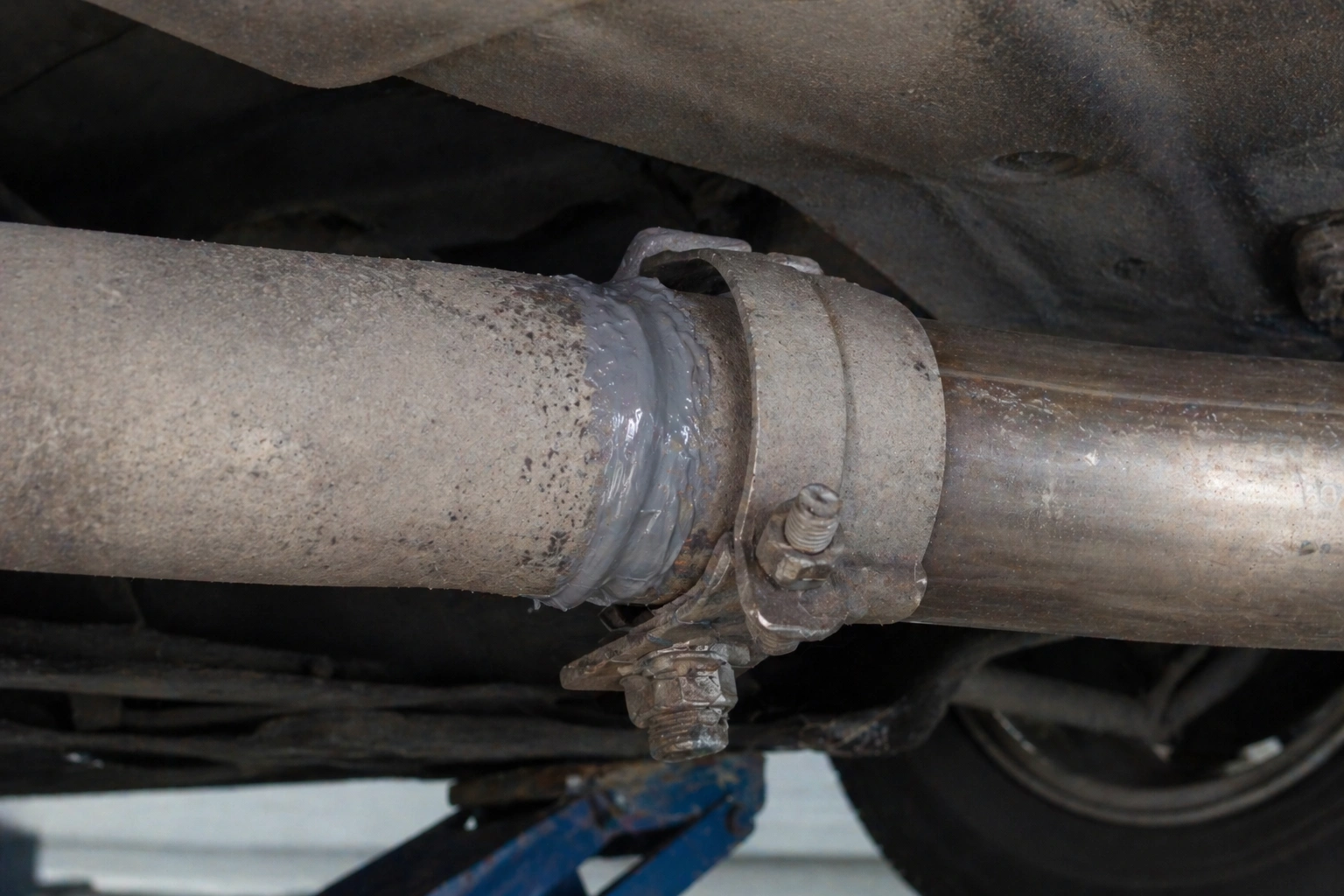
Small leaks, such as minor cracks or holes, can often be fixed using simple methods. Exhaust repair tape or sealant is commonly used for these situations. These materials are designed to withstand high temperatures and create a temporary seal.
Applying the repair material requires cleaning the affected area first. Removing dirt and rust ensures better adhesion and a more effective seal. Once applied, the material should be allowed to set according to instructions.
Clamps can also be used to secure loose connections. Tightening or replacing clamps helps close gaps and restore proper alignment. This is a straightforward solution for leaks caused by loose joints.
These methods provide temporary relief and can extend the life of the exhaust system. However, they are not permanent fixes and may need to be revisited later.
Repairing Or Replacing Damaged Sections
For larger leaks or severe damage, replacing the affected section is often the best solution. This may involve removing a portion of the exhaust pipe and installing a new one. While this process requires more effort, it provides a long-term fix.
Cutting out the damaged section and fitting a replacement ensures that the system is restored to proper condition. Using the correct size and type of pipe is important for maintaining compatibility and performance.
In some cases, welding may be used to repair cracks or secure new sections. This method creates a strong and durable connection but may require professional tools and expertise.
Replacing damaged components ensures that the exhaust system functions as intended. It eliminates leaks and reduces the need for repeated repairs.
Preventing Exhaust Leaks In The Future
Regular Inspection And Maintenance
Preventing exhaust leaks starts with regular inspection. Checking the system periodically helps identify early signs of wear, such as rust or loose connections. Addressing these issues before they develop into leaks saves time and effort.
Cleaning the underside of the vehicle can also help reduce corrosion. Removing dirt and moisture prevents buildup that can lead to rust. This is especially important in areas with harsh weather conditions.
Maintaining proper engine performance also plays a role. A well-running engine reduces stress on the exhaust system, helping it last longer. Regular servicing ensures that all components work together efficiently.
Consistent maintenance keeps the exhaust system in good condition. It reduces the likelihood of unexpected problems and supports long-term reliability.
Driving Habits And Environmental Factors
Driving habits can influence the condition of the exhaust system. Avoiding rough roads and obstacles reduces the risk of physical damage. Being mindful of speed bumps and uneven surfaces helps protect components underneath the vehicle.
Short trips can contribute to moisture buildup inside the exhaust system. This moisture can lead to rust over time. Taking longer drives occasionally allows the system to heat up fully and evaporate accumulated moisture.
Parking conditions also matter. Keeping the vehicle in a dry and covered area reduces exposure to moisture and environmental elements. This helps slow down the process of corrosion.
Adopting these habits supports the longevity of the exhaust system. It helps prevent leaks and ensures that the system remains effective over time.
Conclusion
An exhaust leak may start as a small issue, but it can affect performance, efficiency, and safety if left unaddressed. Identifying the cause and applying the right solution helps restore proper function and prevent further damage.
Simple repairs can handle minor issues, while more serious damage may require replacement of components. Taking a careful and informed approach ensures that the repair is effective and long-lasting.
Regular maintenance and mindful driving habits play a key role in preventing future problems. Keeping the exhaust system in good condition supports overall vehicle performance and ensures a quieter, safer operation.